The Federal Government has called on state governments, local education authorities and private school owners across the country to join the Digitalised Nigeria Education Management Information System (DNEMIS), describing accurate education data as essential to improving learning outcomes and strengthening education planning.
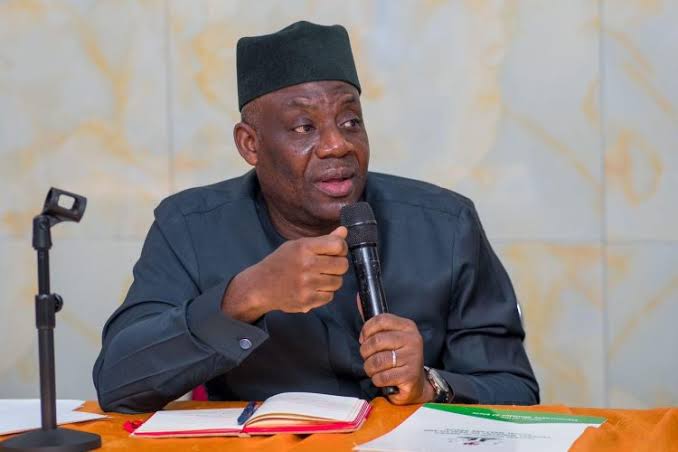
Minister of Education, Tunji Alausa, made the appeal on Wednesday in Abuja during the official unveiling of the digital platform.
According to the minister, reliable data remains the foundation of meaningful education reform, noting that governments cannot effectively solve problems in the sector without dependable statistics.
The DNEMIS platform was developed as Nigeria’s central education data repository and is expected to provide real-time information on schools, classrooms, teachers, students and critical infrastructure, including computer laboratories, electricity, water, sanitation and hygiene facilities.
Alausa said the initiative would transform how education data is collected and used by enabling policymakers to identify infrastructure shortages, monitor school enrolment, improve teacher deployment and channel investments to areas with the greatest needs.
He explained that education commissioners, local government education authorities and school administrators would now have access to real-time information to support evidence-based decision-making and improve service delivery.
The minister disclosed that Nigeria currently has 213,235 schools nationwide, but only 124,548 have submitted data to the system so far, representing a reporting rate of 58.4 per cent.
Data already captured on the platform includes more than 40 million learners, over one million teachers, more than 730,000 classrooms and over 600,000 toilet facilities.
He said the figures demonstrate both the scale of Nigeria’s education system and the significant information gaps government is seeking to close.
Alausa acknowledged that implementation of the project experienced delays but said support from development partners accelerated its rollout.
He commended international partners including the World Bank, European Union, Norway and UNICEF for contributing to the development of the platform.
Addressing concerns from private school operators, the minister assured stakeholders that the data collection exercise was not intended to increase taxation.
He encouraged private institutions to participate actively, noting that they now account for a substantial portion of Nigeria’s education sector.
According to him, nearly three-quarters of junior secondary schools in the country are privately owned, making their inclusion essential for producing credible national education statistics.
Alausa also called on state governments to intensify awareness campaigns and encourage schools within their jurisdictions to upload their information.
He stressed that with more than 50 million learners in the Nigerian education system, timely and accurate data has become indispensable for planning future investments and improving educational outcomes.
Also speaking at the event, Director-General of the National Bureau of Statistics, Semiu Adeniran, pledged the agency’s support for the initiative.
Adeniran said the bureau would integrate its systems with the education database to help create a single, trusted source of education statistics in Nigeria.
He added that the agency would also support the project through household surveys and data validation processes to strengthen education planning, monitoring and policy implementation nationwide.
Government officials expressed optimism that broad participation from states, local governments and private schools would make DNEMIS Nigeria’s most comprehensive education database and support reforms aimed at improving learning outcomes across the country.