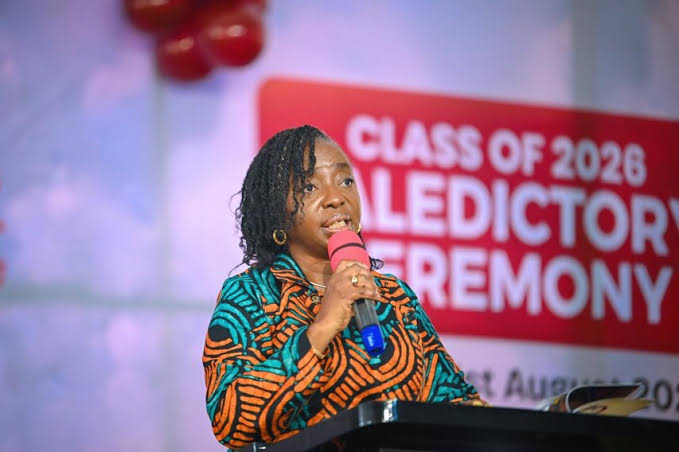
The First Lady of Lagos State, Dr. Ibijoke Sanwo-Olu, has said teaching boys how to cook is an essential life skill that prepares them for future careers, independent living and responsible family life, stressing that cooking should not be viewed as a responsibility reserved for women.
She made the remarks on Monday at the 2026 Lagos Boy Child Initiative Cooking Competition Prize-Giving Ceremony held at the Lagos Marriott Hotel, Ikeja, where she encouraged young boys to embrace culinary skills as a pathway to self-reliance and economic opportunities.
According to her, equipping boys with practical skills such as cooking helps them become responsible men capable of supporting their families while also positioning them to take advantage of the expanding hospitality industry.
“There is something truly remarkable about a young boy who discovers that his hands can do more than write examinations or operate digital devices. They can also prepare meals, create opportunities, build careers and bring joy to others,” she said.
Sanwo-Olu noted that the initiative is designed to move beyond conventional classroom education by exposing boys to practical life skills that will prepare them for adulthood and an increasingly competitive world.
She explained that the cooking competition was introduced to challenge the long-held belief that cooking is exclusively a woman’s responsibility, adding that the programme encourages boys to become independent whether they study abroad, work away from home or eventually build their own families.
“Our objective was to expose our boys to culinary skills, ignite their passion for the hospitality industry and help them understand that cooking is not merely a domestic activity but a respected profession capable of creating wealth, employment and global opportunities,” she said.
The First Lady said the initiative aligns with Governor Babajide Sanwo-Olu’s THEMES+ development agenda, particularly its emphasis on youth development, skills acquisition and social inclusion.
Highlighting the growing opportunities in Nigeria’s tourism and hospitality sectors, she said the country would continue to require skilled professionals in hotels, restaurants, catering, event management and other related businesses.
“Some of the young boys here today could become tomorrow’s celebrated chefs, hospitality managers, food entrepreneurs or owners of internationally recognised restaurant brands. We must begin preparing them now,” she added.
Sanwo-Olu also stressed that cooking remains an indispensable survival skill regardless of career choice, saying young men who can take care of themselves are better equipped to face life’s challenges with confidence and dignity.
She challenged cultural stereotypes surrounding domestic responsibilities, insisting that learning to cook does not diminish a boy’s masculinity.
“When our boys learn to cook, they are not becoming less masculine; they are becoming more responsible, more compassionate and better prepared for life,” she said.
She further explained that the shopping vouchers presented to the winners were intended to teach financial discipline, budgeting and responsible leadership within the family rather than merely reward outstanding performance.
The competition, organised under the Lagos Boy Child Initiative, featured participants aged 13 to 17 drawn from public and private schools, military and faith-based institutions, orphanages and correctional facilities across the state’s five administrative divisions.
District II emerged overall winner with 47 points, while District IV and District VI finished second and third respectively. Beyond cash vouchers, leaders of the three winning teams received fully sponsored three-week Continental Culinary Arts training at the Red Dish Chronicles Culinary School in Lagos.
The First Lady also announced that the winners would represent the Lagos Boy Child Initiative at the prestigious Jollof Cooking Competition organised by the Akwaaba African Travel Market on September 13.
Launched in 2021, the Lagos Boy Child Initiative focuses on mentoring young boys through leadership development, vocational training, life-skills education and advocacy programmes aimed at preparing them for productive and responsible adulthood.