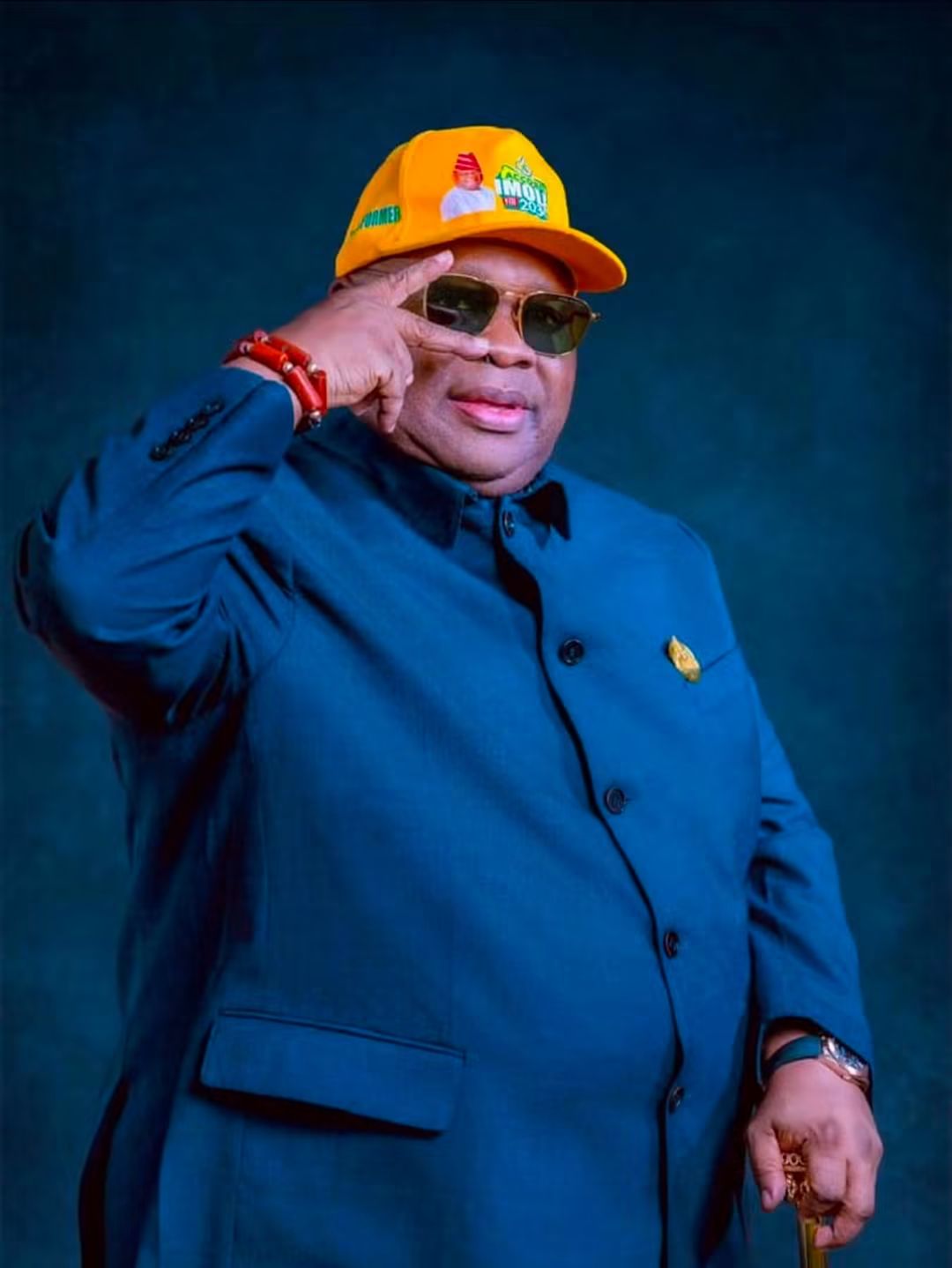
So, Ademola Adeleke won again. But that is only the beginning of the story. The real story is hidden inside the numbers. How does a governor who won by 28,344 votes in 2022 return four years later to win by 66,252? How does he do it after changing parties? Why does the APC, despite increasing its own vote, still lose ground? Why does a candidate win his home territory by almost 19,000 votes and yet lose the state by more than 66,000?
And what happened to the Osun electoral map between 2022 and 2026? These are the questions that make the final result more than a victory margin. They turn it into a political story about identity, incumbency, personal branding, local loyalties, political networks and the changing behaviour of the Osun electorate.
The numbers suggest that Adeleke did not simply defend the coalition that brought him to office in 2022. He expanded it. And that may be the most important thing about the 2026 election.
The numbers tell the first part of the story
Elections are often described by their final numbers: who won, who lost and by how many votes. But numbers become more revealing when they are placed beside the map of the previous election and examined for the movements beneath the headline.
The 2026 Osun governorship election provides such an opportunity. Governor Ademola Adeleke, running on the platform of the Accord Party, polled 511,067 votes, defeating the All Progressives Congress candidate, Bola Oyebamiji, who scored 444,815 votes. The final margin was 66,252 votes. It was a substantial improvement on Adeleke’s 2022 victory, when he defeated Gboyega Oyetola by 28,344 votes, polling 403,371 votes against Oyetola’s 375,027.
Yet the 2026 result should not be interpreted as an APC collapse. The APC actually increased its vote by almost 70,000 compared with 2022. Adeleke’s increase was considerably larger more than 107,000 votes. The essential story, therefore, is not that the APC disappeared. It is that Adeleke grew faster. That growth changed the electoral mathematics of Osun.
The Ede foundation became stronger
The first place to look is Ede. In 2022, Adeleke’s greatest electoral advantage came from Ede North and Ede South. The two local government areas provided him with a combined margin of more than 28,000 votes. Four years later, the fortress became even stronger.
In Ede North, Adeleke scored 35,427 votes against APC’s 10,283, giving him a margin of 25,144. In Ede South, he recorded 26,188 votes against 6,219, a margin of 19,969.
Together, the two LGAs produced an Adeleke advantage of approximately 45,000 votes. This is important not merely because of the size of the numbers but because of what Ede represents in Adeleke’s political identity. His relationship with the area is intensely personal. The 2026 result demonstrates that the movement from PDP to Accord did not fracture that base.
If anything, it strengthened it. But Ede alone could not have produced a 66,252-vote statewide victory. The decisive story was what happened beyond Adeleke’s traditional base.
The East moved and that changed the equation
The most consequential movement occurred in Osun East. In 2022, the APC narrowly carried the senatorial district, with Oyetola receiving 121,873 votes against Adeleke’s 120,080. The margin was only 1,793 votes. The 2026 results reveal a much more complicated landscape, but one in which Adeleke made important gains, particularly around the Ife axis.He won Ife North with 13,879 votes against APC’s 9,613; Ife Central with 21,171 against 15,913; and Ife East with 27,201 against 18,600. The Ife East result is particularly revealing.
In 2022, the APC held the LGA by a narrow margin. In 2026, Adeleke won it by 8,601 votes. Ife Central tells a similar story. An APC advantage in 2022 became an Adeleke advantage in 2026. These were not marginal changes. They represented the penetration of an electoral territory that had previously formed part of the APC’s defensive wall. This is one of the strongest reasons why the 2026 result cannot simply be described as a repeat of 2022. Adeleke did not only protect his territory. He took territory.
But Irewole tells the opposite story
If Ede illustrates the power of Adeleke’s personal and local identity, Irewole illustrates the power of the home-candidate effect. Oyebamiji won Irewole decisively. He scored 29,972 votes against Adeleke’s 10,934, giving the APC candidate a margin of 19,038 votes. The scale of the victory is striking.
In 2022, the APC also won Irewole, but its margin was far smaller. The 2026 result transformed it into one of Oyebamiji’s strongest areas. The political interpretation is compelling: a candidate’s connection to his immediate political and geographical constituency can produce extraordinary mobilisation.
There was a powerful local message embedded in the result—if the state was going to produce a governor, why should that governor not come from the axis? But Irewole also demonstrates the limitation of local mobilisation. Oyebamiji could win his home territory by almost 19,000 votes and still lose the state by more than 66,000. The APC candidate won a home front; Adeleke won the broader map.
The APC did not collapse
This is perhaps the most important corrective to some of the early interpretations of the election. The APC remained strong. It won Boripe with 19,963 votes against Adeleke’s 12,448. It won Ilesa East, Obokun, Atakumosa West and East, Irepodun, Irewole and several other areas. Indeed, in some of these places the APC’s performance was formidable.
The problem was not that the APC lacked voters. It was that its voters were concentrated in territories that could not compensate for Adeleke’s accumulated margins elsewhere. This is the classic difference between holding a base and expanding a coalition. Oyebamiji held important APC territory. Adeleke expanded beyond his.
Six LGAs changed hands
The final results show that Adeleke captured six LGAs that had supported the APC in 2022: Ayedaade, Ayedire, Ife Central, Ife East, Ifedayo and Iwo. At the same time, he lost some of the areas that had supported him four years earlier, including Atakumosa West, Irepodun, Obokun and Olorunda. The net movement was therefore not an electoral tsunami across every part of Osun. It was more subtle.
Adeleke exchanged some territory while gaining other, electorally important territory. This is what makes the result analytically interesting. The 2026 map was not simply redrawn in one direction. It was reweighted. The places Adeleke gained, combined with the larger margins he achieved in his strongholds, were sufficient to transform a 28,344-vote victory into a 66,252-vote victory.
The Omisore paradox
The result also raises questions about political structures that exist beyond formal party labels. Former deputy governor and influential Osun politician Iyiola Omisore publicly maintained his affiliation with the APC during the campaign. Yet there were reports of political structures associated with him moving towards Adeleke. More symbolically, Accord defeated the APC at Omisore’s own polling unit in Ife East.
One polling unit cannot establish that Omisore delivered the Ife axis to Adeleke, and it would be analytically irresponsible to make such a claim. But the episode illustrates a larger truth about Osun politics: party membership and political allegiance are not always the same thing. Adeleke’s ability to retain political networks outside the formal PDP structure was significant. His departure from the PDP did not result in the collapse of his political coalition. Instead, the electorate largely followed the candidate. That may be one of the most revealing features of the election.
Was the election about Adeleke or Accord?
This brings us to the deeper question. Adeleke contested under Accord, a party whose institutional strength cannot be compared with that of the APC. Yet he won 511,067 votes.
That raises the possibility that a substantial part of the electorate was not voting primarily for the party label. They were voting for Adeleke. The 2026 election therefore offers a fascinating case study in the power of political personalisation. The electorate that voted PDP for Adeleke in 2022 largely followed him to Accord in 2026.
This suggests that the political equation in Osun may increasingly be understood not simply as PDP versus APC or Accord versus APC, but as: Adeleke versus APC. That distinction matters. It means Adeleke’s political capital has become, to a significant degree, personal capital.
A performance vote or an emotional vote?
It would be tempting to conclude that Adeleke’s victory was a straightforward endorsement of his performance in office. There is certainly a performance argument to be made. His campaign pointed to infrastructure, social programmes and other visible interventions. But the election results alone cannot establish why each voter voted the way they did.
The result could reflect a combination of factors: incumbency, performance, identity, political alliances, emotional attachment, anti-APC sentiment, mobilisation, patronage and candidate preference. Adeleke’s distinctive political style, however, cannot be ignored.
His politics has always been highly personalised and emotionally resonant. His supporters often identify with the man, his story and his political persona as much as with the formal institution of government. The 2026 election appears to have reinforced that relationship.
The question, therefore, is not necessarily whether voters ignored governance. It may be that governance itself was interpreted through the personality of the governor. Adeleke may have successfully turned his administration’s achievements into elements of a broader personal political brand.
Violence and the politics of emotion
The emotional character of the election also deserves attention. The campaign was marked by allegations of violence, killings, threats and political recriminations. Such an environment inevitably shapes the psychological atmosphere in which citizens make political choices. It would be too strong, however, to claim that the violence directly caused voters to support Adeleke. The available election results cannot establish such causality.
What can reasonably be argued is that voters were making choices in an environment where fear, anger, identity and the desire for security were part of the political conversation. That environment may have reinforced the appeal of a candidate who had already established a strong emotional relationship with his base. The election was therefore not simply a contest of manifestos and policy prescriptions. It was also a contest over emotion, identity and trust.
The ADC factor
The emergence of Najeem Salaam and the ADC added another variable to the election.But the final numbers suggest that it was not large enough to determine the statewide outcome. ADC polled 17,180 votes. Even if every ADC vote had gone to the APC, Oyebamiji would still have trailed Adeleke by almost 50,000 votes.
This does not make the ADC irrelevant. Its votes may have mattered in particular LGAs and could have influenced local margins. But statewide, the election remained fundamentally a two-horse contest.
What changed between 2022 and 2026?
The difference between the 2022 and 2026 elections tells perhaps the clearest story of what changed in Osun. In 2022, Ademola Adeleke polled 403,371 votes, defeating the APC candidate, Gboyega Oyetola, who secured 375,027 votes, giving Adeleke a winning margin of 28,344 votes. Four years later, Adeleke’s vote rose dramatically to 511,067, while the APC also increased its tally to 444,815. The margin, however, widened substantially to 66,252 votes.
Put differently, Adeleke added 107,696 votes to his 2022 tally, while the APC increased its own by 69,788 votes. The figures therefore do not support the argument that the 2026 election was simply an APC collapse. The APC actually grew its electoral support. Adeleke simply grew much faster.
And perhaps the most significant part of that growth is that he achieved it after moving from the PDP platform on which he won in 2022 to the Accord platform in 2026. That may well be the central political fact of the Osun election: the electorate appeared to follow the candidate more than the party label.
The bigger political lesson
The election appears to have produced a contest between two forms of political capital. The APC possessed institutional capital: party structure, national visibility, established political networks and a candidate with administrative experience.
Adeleke possessed personal electoral capital: a powerful identity, a loyal base, strong local roots, political networks that survived party realignment and a distinctive emotional connection with voters. On the final numbers, personal electoral capital proved stronger.
But that victory creates a new test. A political brand can win an election. It cannot, by itself, build hospitals, reform institutions, create jobs or transform the economy. That is the challenge before Adeleke now.
The 2026 election has demonstrated that Adeleke can convert personal popularity into votes across a state. The next four years will determine whether he can convert that popularity into institutional performance and durable governance. That distinction matters because the ultimate measure of the 2026 election cannot be the size of the winning margin. It must be what the winner does with it.
In 2022, Adeleke won the election. In 2026, he appears to have won the political argument as well. The question now is whether the political brand can become an enduring governing legacy.