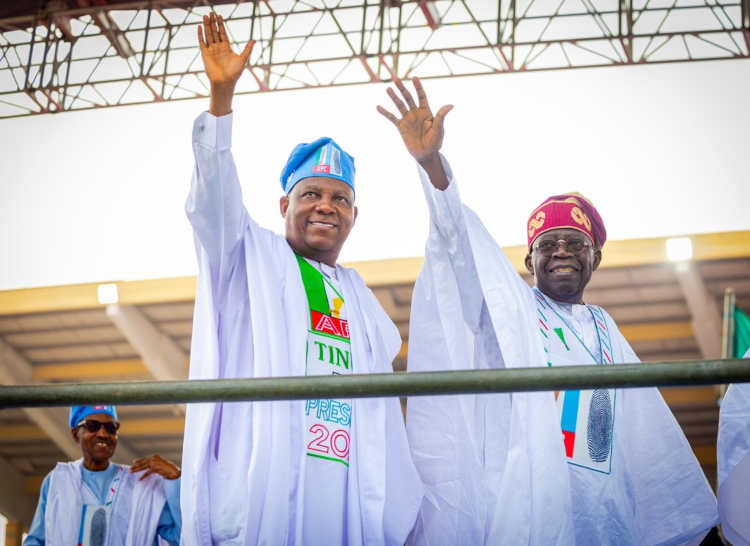
A number of factors, ranging from age and health concerns to prohibitive campaign costs and other constraints, have been identified as possible reasons why political parties that fielded presidential candidates, including the ruling party, have yet to commence nationwide electioneering, barely three months before the end of the campaign window.
Recall that on February 26, 2026, the Independent National Electoral Commission (INEC) announced August 19, 2026, as the commencement date for open campaigns ahead of the January 16, 2027, presidential and National Assembly elections.
However, with barely 93 days left before the close of electioneering, none of the parties or presidential candidates have demonstrated a serious commitment to holding open campaign rallies, unlike what was seen in the run-up to the 2023 presidential election.
An investigation showed that the ages and health conditions of some of the major contenders, the cost of organising rallies, insecurity and speculation about possible electoral manipulation have combined to diminish the prominence of nationwide campaigns that should define the build-up to a general election— The Guardian.
A total of 47 of the 150 days allocated for campaigns have elapsed, yet political parties continue to dither, lacking any discernible strategy or campaign messaging to anchor their quest for votes. This has heightened public apprehension about the fate of the election.
Campaign activities appear less vigorous than the nationwide mobilisation, extensive tours and huge financial commitments that characterised the 2023 contest.
Although parties have continued to hold meetings, secure endorsements, and conduct behind-the-scenes consultations, incumbent President Bola Tinubu of the All Progressives Congress (APC) and one of his challengers, former Vice President Atiku Abubakar of the African Democratic Congress (ADC), have yet to match the energy of previous election cycles.
In a defensive response, the APC has rejected suggestions that the inertia reflects a lack of preparedness, insisting that its presidential campaign has not formally commenced.
According to the party’s National Chairman, Nentawe Goshwe Yilwatda, the APC is following its campaign timetable and will begin with the inauguration of its presidential campaign team.
“The President’s National Campaign Team will start tomorrow (Wednesday), while the Presidential Campaign Committee will be inaugurated on Saturday,” he said through his aide, Abimbola Tooki.
However, stakeholders who spoke to The Guardian, including a former presidential candidate of the defunct United Progressives Party (UPP), Dr Chekwas Okorie, and a former National Secretary of the ruling APC, Waziri Bulama, expressed dismay over what they described as a decline in the country’s democratic culture.
Bulama said the journey towards the present precarious state of Nigerian politics began when academics, technocrats and civil society groups rallied behind the late President Muhammadu Buhari to assume civilian leadership in 2015.
He recalled that before 2015, ideologues mobilised grassroots support and advanced campaigns against the ruling Peoples Democratic Party (PDP), which was perceived as averse to good governance.
“The PDP was seen as oppressive and self-serving. So, advocating against the PDP was seen as a national duty. There was voluntarism. People from radical backgrounds, particularly those from the Northern Elements Progressives Union (NEPU) tendency and the Peoples Redemption Party (PRP), rallied with passion and patriotism behind Buhari, whom they saw as a champion of national rescue.
“They believed that Buhari would redeem the country from stagnation, corruption and decline. They were inspired and donated their ideas, time and financial resources. People like me, with double postgraduate degrees in Architecture, who ordinarily had no business in politics, became interested.
“But as soon as Buhari became President, he abandoned everybody. Those from the Action Congress of Nigeria (ACN), who were notable in the fight for democracy, including journalists, academics and technocrats, were involved. People’s enthusiasm waned because of Buhari’s attitude.
“From 2019 to 2023, those who were sidelined and dissatisfied moved to other political groups. There was no longer a binding strategy to keep people in the party. In the 2019 presidential election, Buhari scored 15 million votes against Atiku Abubakar’s 11 million to secure victory.
“In 2023, President Tinubu’s winning tally was put at 8.9 million votes. Most of those who worked for that electoral triumph were displaced. State governors took control of the party and dismantled various structures to install their loyalists. So, people are not warming up to the campaigns in the APC because very few people sat together to design the campaign structure, thereby ensuring the exclusion of key stakeholders,” he said.
Bulama further argued that the ruling party was counting on its control of federal power to its advantage, rather than preparing a popular message with which to engage the electorate.
He said: “Hubris has taken over. The ruling party has succeeded in crippling the opposition parties by investing in legal battles. The Electoral Act 2026 was actually targeted at the opposition. And with the recent Supreme Court judgment, nobody is sure whether Atiku and Peter Obi will stand for the election.
“So, heading into the election, even the APC and other parties are operating on a low-key and lacking in purpose. There is no coherent commitment to the coming election. The ruling party is depending on its control of power. It has people like Senators Godswill Akpabio and Adams Oshiomhole, Nyesom Wike, Senator Ali Modu Sheriff and Abdullaziz Yari.
“The party does not want to engage Nigerians on serious issues such as security and the cost of electricity. The party has also been sidelined because the campaign structures of the President’s wife and son are occupying centre stage. I am worried about Nigeria’s democracy.”
For his part, Okorie said the atmosphere at this stage of the electoral cycle should ordinarily be upbeat, with most candidates campaigning on what they intend to do if elected, while the incumbent explains what it plans to do differently.
“On the contrary, there have been so many threats, intimidation and the possibility of violence, coming principally from the ruling party and the government. This government has leverage that no other ruling party has ever had, with as many as 32 governors declaring support for the President.
“The APC has overwhelming support in the National Assembly, which Nigerians have described as a rubber stamp. But the ruling party is afraid of the people’s verdict at the polls. Instead of rendering accounts and telling Nigerians what they intend to do differently, they resort to threats.
“This has brought about a halt or lull in the struggle for 2027. What we are observing is the silence of the graveyard. Nigerians are waiting for the day of voting. Any attempt to manipulate their franchise will be very devastating and could determine the fate of the nation,” he said.
Okorie, who contested the 2015 presidential election on the UPP platform, decried the constriction of the electoral space. He lamented that a situation in which opposition parties have to cough up N150 million to put up a billboard in the Federal Capital Territory and as much as N250 million in the states does not augur well for democracy.
He observed that while the government had the money to erect billboards, citizens resorted to destroying them. Questioning the gains from the quagmire, he added: “These are ominous signs that we are heading towards a dangerous, very difficult and unimaginable situation.”
While expressing optimism that things would pick up by December, Okorie maintained that January would be frenetic and decisive. He, however, regretted that INEC, which should have offered a saving grace, had long lost the confidence of Nigerians.
Candidates’ accessibility emerges as campaign issue
Presidential electioneering places considerable demands on candidates, requiring frequent travel, long hours at rallies, meetings with political stakeholders, media interviews and appearances across different regions.
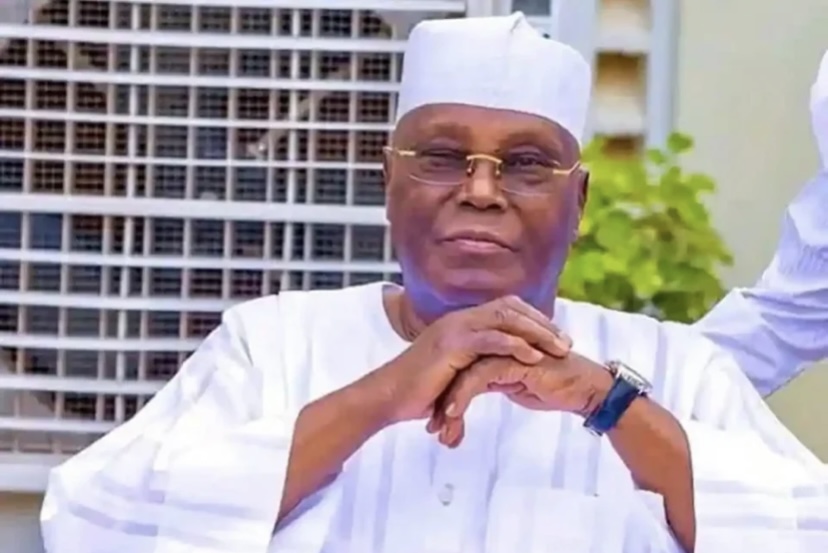
At 74, Tinubu is seeking another term, while Atiku, who turns 80 in November, is preparing for another presidential contest. Their ages have consequently featured in discussions about the physical demands of campaigning, although age alone does not establish an inability to sustain an intensive election schedule.
Similarly, limited public appearances cannot, without credible evidence, be treated as proof of ill health. A more objective assessment would consider the frequency of state visits, interviews, rallies and direct engagements with voters, compared with previous election cycles.
The APC’s explanation suggests that the perceived lull may partly reflect the distinction between preliminary political mobilisation and formal campaigning. Nevertheless, the extent to which candidates personally engage voters, rather than rely on their political structures, is likely to influence perceptions of their accessibility and commitment.
Tinubu’s campaign council, headed by former Zamfara State Governor Abdulaziz Yari, is scheduled for inauguration tomorrow, ahead of a campaign flag-off in Kaduna on October 24. The ADC has also inaugurated its presidential campaign council as it prepares to challenge the incumbent.
These preparations indicate that neither camp has abandoned conventional campaigning. The critical question is how effectively the candidates will combine personal appearances with their parties’ mobilisation capacity as the election approaches.
Yilwatda dismissed suggestions that health concerns were affecting Tinubu’s readiness to campaign, pointing to the President’s October 1 national broadcast as evidence of his fitness.
“President Tinubu, whom you saw on October 1 during the national broadcast, did not look ill. He told journalists himself that he is hale and healthy,” he said.
The APC chairman’s response reflects the party’s determination to counter speculation about the President’s health. However, the broader electoral issue extends beyond assurances about physical fitness to whether candidates can sustain public engagement, explain their programmes and respond directly to questions about their records.
For Tinubu, the challenge is to demonstrate accessibility while defending his administration’s performance and seeking another term. Atiku, meanwhile, must demonstrate that he can sustain a nationwide campaign and present a convincing alternative to the incumbent.
These questions have gained political significance following Tinubu’s recent absence from Nigeria. While the Presidency maintained that he was well and continued to direct government business from abroad, the ADC used the episode to promise a more physically present and accessible presidency under Atiku.
The exchange has made presidential availability part of the emerging contest. Nevertheless, voters will ultimately assess the candidates based on their programmes, records, capacity to govern and willingness to engage the electorate.
Former ADC National Chairman, Ralph Nwosu, expressed confidence in Atiku’s ability to participate fully in the campaign, dismissing concerns about his capacity to withstand its demands.
His position suggests that the opposition party does not consider Atiku’s age an impediment to its preparations. The effectiveness of its campaign, however, will depend on more than the candidate’s physical participation, particularly its ability to organise nationwide structures and communicate a coherent message.
Rising campaign costs test parties’ mobilisation capacity
Beyond the personal demands of electioneering, the financial implications of organising a nationwide campaign could influence candidates’ strategies.
Presidential campaigns require substantial spending on transportation, accommodation, security, publicity, advertising, campaign offices, communication equipment and the coordination of supporters.
Large rallies also involve venue preparation, public address systems, canopies, branded materials, and logistics for party officials and participants.
Moving candidates, security personnel, journalists and campaign teams across the country adds to the burden, particularly when several events are scheduled within a short period. Maintaining campaign offices and transporting supporters across the six geopolitical zones can further increase expenditure.
These costs are emerging against a background of economic hardship, with households and businesses contending with rising living expenses. Campaign organisations must therefore consider how to deploy resources while maintaining sufficient visibility and contact with voters.
National Publicity Secretary of the Social Democratic Party (SDP), Olu Agunloye, said the cost of electioneering was forcing smaller parties to reconsider their strategies.
According to him, neither the age nor the health status of his party’s candidate was responsible for its campaign approach. Rather, the financial demands of the exercise had made it difficult for parties to sustain the spending associated with previous elections.
“Under no circumstances can any political party dispense funds and resources for campaigns the way it was done in previous years,” he said.
Agunloye’s observation highlights the disparity in campaign capacity between parties with extensive political networks and resources and those operating with more limited means.
For smaller parties, targeted engagements, local mobilisation, media interviews and digital communication may be more practical than elaborate rallies across the country. The challenge is ensuring that financial constraints do not significantly reduce their visibility or prevent candidates from reaching voters outside major urban centres.
For the APC and ADC, the question is not simply how much money can be committed to campaigning, but whether the spending produces meaningful voter engagement and communicates clear policy alternatives.
Political allies extend candidates’ reach, but voters hold the key
Political allies offer another way for candidates to manage the demands of nationwide mobilisation.
Governors, senators, legislators, party officials, former officeholders and grassroots organisers can mobilise support in locations that presidential candidates cannot visit personally. They can organise meetings, explain campaign programmes and coordinate local networks while candidates concentrate on major rallies, interviews and strategic engagements.
The APC’s relationships with governors and other political officeholders provide Tinubu with an extensive mobilisation network. The party has also benefited from endorsements and political activities organised by influential leaders ahead of the President’s nationwide campaign.
Yilwatda dismissed the suggestion that Tinubu was relying on surrogates because of an inability or unwillingness to campaign personally.
Since the formal exercise had yet to commence, he argued, it was premature to describe the activities of party leaders as campaigning by proxy.
“Nobody is campaigning by proxy,” he said.
He expressed confidence in the commitment of APC governors across the geopolitical zones, saying they were fully committed to Tinubu’s re-election, their own electoral prospects where applicable and the emergence of their preferred successors where necessary.
The APC chairman’s position underscores the importance the ruling party attaches to its governors and grassroots structures. Their influence could help the President maintain a nationwide presence, particularly in states where the party controls the machinery of government.
However, the effectiveness of this arrangement will depend on whether local political structures can translate their influence into support for the presidential candidate. Governors may command considerable influence within their states, but voters can distinguish between their local leaders and the presidential candidate they are being asked to support.
Political allies may also prioritise personal interests, patronage and local rivalries over a campaign’s national message. Where competing factions exist within a party, disagreements among influential figures could undermine mobilisation.
The ADC, meanwhile, is building its challenge around Atiku and running mate Rotimi Amaechi, supported by party leaders and other political figures. Its campaign council is expected to coordinate mobilisation, communications and policy engagement across the country.
For the opposition, the task is particularly demanding. It must establish a credible nationwide presence while persuading voters that its political coalition can overcome internal differences and offer a viable alternative to the ruling party.
Endorsements and political gatherings may demonstrate organisational strength, but they do not automatically translate into votes. The real test will be whether party structures can persuade voters through credible policies, effective communication and sustained engagement.
For both candidates, political allies can extend their reach, but they cannot entirely replace direct contact with the electorate.
Presidential candidates face test of converting online visibility into votes
The increasing use of digital platforms has created additional opportunities for political mobilisation, potentially reducing some costs associated with conventional campaigning.
Speeches delivered at rallies can be circulated online, while interviews, campaign videos and policy statements can reach audiences far beyond the locations where they were produced.
Social media, online advertisements, WhatsApp groups and volunteer networks also allow campaigns to maintain contact with voters without organising physical events for every engagement. For candidates facing the financial and logistical demands of nationwide tours, these platforms provide a useful supplement to conventional campaigning.
Yilwatda described the new media environment as a development that political parties and Nigerians generally were adapting to, arguing that there was nothing inappropriate about the APC maximising the opportunities it offered.
His position reflects the ruling party’s willingness to use digital communication alongside its established political structures. For opposition parties, online platforms also provide opportunities to challenge better-resourced competitors and communicate directly with potential supporters.
Digital campaigning is particularly relevant to younger voters who increasingly encounter political information through online platforms. However, online visibility should not be confused with electoral support. High numbers of views, likes and reposts do not necessarily indicate that audiences will vote for a candidate.
Digital campaigns can also be undermined by misinformation, manipulated content and political hostility. Uneven internet access and linguistic diversity further limit the reach of an exclusively online strategy, particularly among voters who depend on community meetings, radio broadcasts and other traditional channels for political information.
Consequently, the effectiveness of digital campaigning will depend on how well parties integrate it with interviews, town hall meetings, community engagements and other opportunities for voters to question candidates directly.
Ultimately, the changing pattern of presidential campaigning raises a broader question about how candidates intend to convert political structures, endorsements and digital visibility into electoral support.
For Tinubu, the challenge is to defend his administration’s record, address public concerns about economic hardship and demonstrate that the advantages of incumbency can translate into renewed electoral confidence.
For Atiku, it is to establish a credible alternative, sustain a nationwide opposition campaign and persuade voters that the coalition behind his candidacy can overcome its internal differences.
Neither candidate can rely solely on political allies, online mobilisation or carefully selected public appearances to secure victory. As the election approaches, voters will expect more than endorsements and campaign promises. They will want clear explanations of the country’s problems, credible proposals for addressing them and opportunities to question those seeking their mandate.
The ultimate test, therefore, will not be the number of rallies held or the resources deployed, but the candidates’ ability to connect their campaigns to the concerns and expectations of Nigerians.