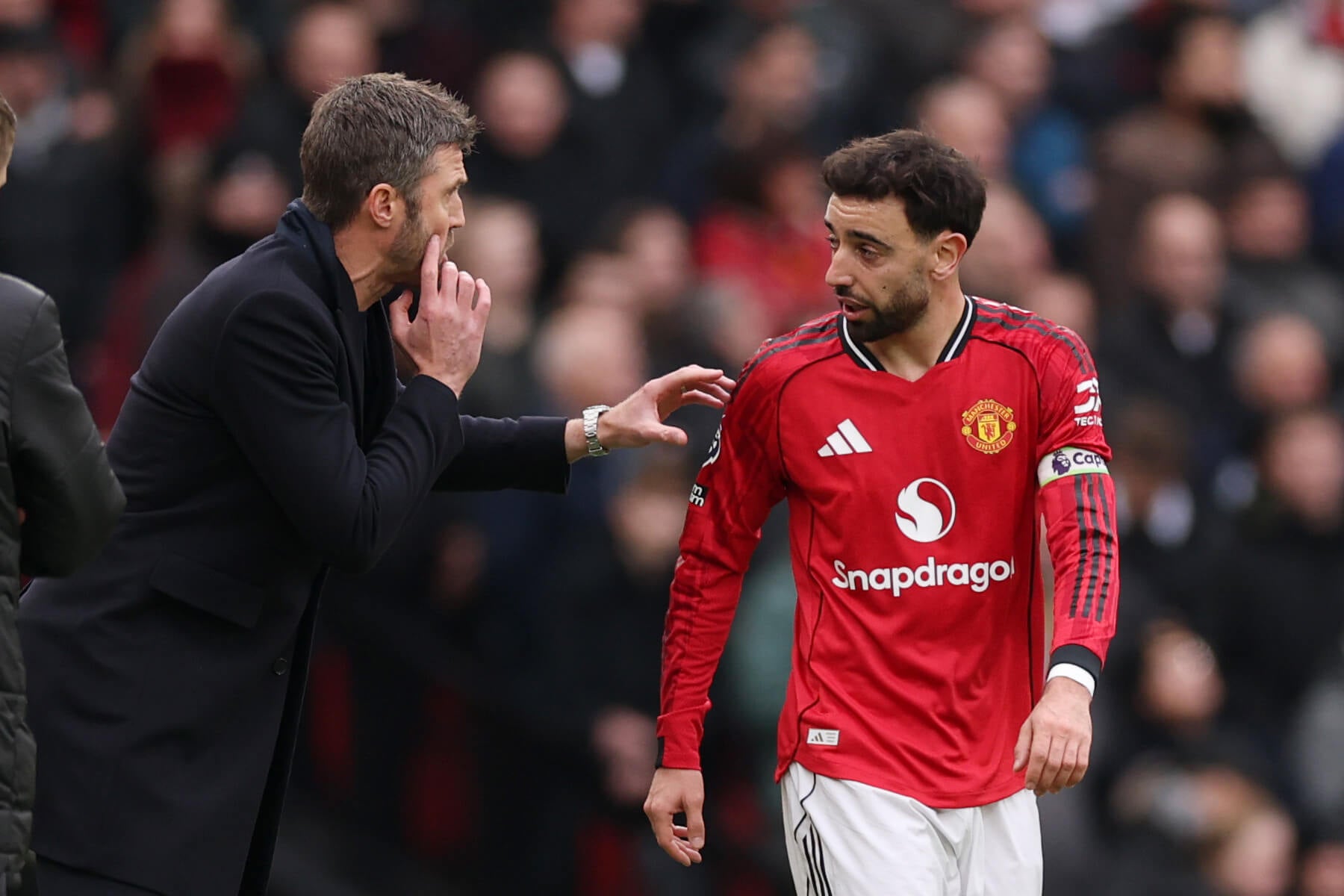
Manchester United’s crisis has deepened following their humiliating 4-1 defeat to Como in the Champions League, with captain Bruno Fernandes questioning the coaching staff’s tactical approach while manager Michael Carrick criticised his players’ lack of intensity and commitment.
The defeat extended United’s winless run to seven matches across all competitions, increasing pressure on Carrick and raising fresh questions about the team’s tactical direction, mentality and ability to compete consistently at the highest level.
The latest setback has also intensified scrutiny of the club’s internal challenges. Following United’s previous Champions League defeat to Atletico Madrid, defender Lisandro Martinez reportedly criticised the club’s hierarchy over transfer-window shortcomings, specifically naming technical director Jason Wilcox.
Fernandes’ post-match comments have now shifted attention to the coaching staff, exposing differing views between the captain and manager over the reasons behind United’s poor performances.
Speaking after Wednesday’s defeat, Fernandes defended his teammates but argued that the team’s approach to pressing opponents allowed Como too much freedom to control possession and dictate the game.
“It’s a decision from the staff to not press man-to-man and sometimes leave a little space in behind and try to get the ball in the first moment, to wait for them, to give them the ball,” the Portuguese midfielder told TNT Sports.
He explained that allowing technically gifted opponents to dominate possession could leave United’s players physically exhausted and mentally frustrated, making it harder for them to respond effectively when they recovered the ball.
Fernandes insisted that the decision to change the team’s pressing approach rested with the manager and his assistants, adding that United needed to take greater risks and press more aggressively to disrupt their opponents.
“That’s on the manager and on the staff to see it, it’s not on me,” he said.
The statistics highlighted Como’s control of the encounter, with the Italian side completing 594 passes, the most by an opponent against United in a Champions League match since Barcelona recorded 725 in April 2019.
Carrick, however, rejected the suggestion that tactics alone explained the defeat, arguing that the players’ work rate and defensive commitment were equally important.
“We half pressed man-to-man in the second half and ended up conceding a goal from that,” he said. “Whatever tactics you play, if you don’t run back, you ain’t going to win.”
The United manager, usually measured in his public comments, was visibly frustrated by the performance and made it clear that he considered the display unacceptable.
“I’m really angry. For us to play in that way is not acceptable,” Carrick said.
He questioned whether his players had shown the motivation, purpose and intensity required for such a demanding fixture, stressing that commitment must remain consistent throughout a match.
“You can’t turn it on and off and you can’t choose when you want to perform or when you don’t want to perform or when you give absolutely everything or when you maybe don’t,” he added.
Carrick also apologised to United’s travelling supporters, saying the manner of the defeat was as troubling as the scoreline itself.
“It wasn’t just the goals. It was the manner we went about that was the difficult thing to watch,” he said.
United’s defensive problems were evident from the opening stages, as they conceded within the first two minutes against both Atletico Madrid and Como. The early setbacks left the team under pressure and reinforced concerns about its ability to start major European fixtures with the required concentration.
Beyond the immediate disappointment, Fernandes called for a fundamental change in the club’s mentality, arguing that United must stop relying on past achievements and focus on rebuilding their identity in the present.
His comments carry added significance because Carrick was part of the successful United side under former manager Sir Alex Ferguson, winning major honours during his playing career at Old Trafford.
“We’re not in the past, we need to look in the future. We need to make things differently in the present,” Fernandes told Sky Sports.
“We focus too much at looking at what the club did in the past. We’re not that anymore. The club and the players needs to understand that.”
The midfielder’s remarks reflect broader frustration over United’s struggles to recapture the consistency and dominance that once established them among Europe’s leading clubs.
In recent seasons, managerial changes, recruitment concerns and inconsistent performances have repeatedly raised questions about the club’s long-term direction. The Como defeat has brought those concerns back into focus, placing further pressure on Carrick and his players to find solutions.
The disagreement between Fernandes and Carrick also highlights two different explanations for United’s struggles: the captain believes the tactical approach needs to be more aggressive, while the manager insists that players must demonstrate greater effort and commitment regardless of the system.
United must now respond when they host Bournemouth in the Premier League on Sunday, with the fixture offering an opportunity to end their winless run and begin restoring confidence among supporters.
With two defeats in their opening three Champions League matches, United face mounting pressure to improve not only their results but also their tactical organisation, defensive discipline and consistency. Whether Carrick can address those concerns while maintaining the confidence of his captain and teammates will be an important storyline as the season progresses.