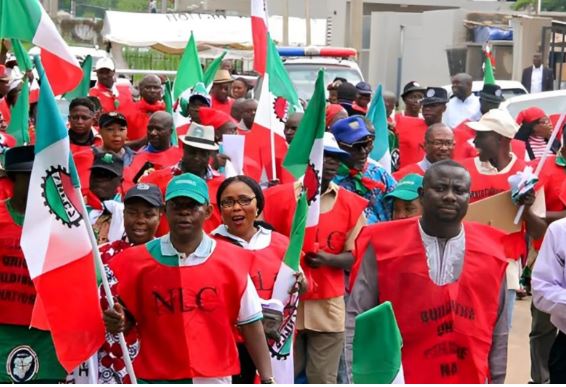
Public sector workers across Nigeria have commenced a three-day nationwide warning strike over what their unions describe as worsening economic hardship and the Federal Government’s failure to address their demands.
The industrial action, which began at midnight on Friday, October 2, is expected to run until Sunday, October 4, 2026. The directive covers workers at the federal, state and local government levels, including employees of ministries, departments and agencies.
The strike was declared by the Joint National Public Service Negotiating Council, JNPSNC, which comprises several public-sector unions, including the Nigeria Civil Service Union, Medical and Health Workers Union, Association of Senior Civil Servants of Nigeria and National Association of Nigerian Nurses and Midwives.
The council said the action became necessary after the Federal Government failed to respond to demands contained in a September 21 letter to President Bola Tinubu.
At the centre of the dispute is the rising cost of petrol and its impact on the purchasing power of workers and other Nigerians.
The unions are demanding that the pump price of petrol be reduced to N500 per litre, an immediate wage award to cushion the effects of rising living costs and the establishment of a tripartite committee to begin negotiations for a new national minimum wage ahead of 2027.
The JNPSNC had given the government until September 30 to address the issues, warning that failure to do so would trigger the three-day warning strike.
The council said its position remained unchanged after President Tinubu’s Independence Day address on October 1, in which, according to the union, the specific demands were not addressed. The workers subsequently directed their members nationwide to proceed with the industrial action.
In its circular announcing the strike, the JNPSNC described the economic situation facing workers, their dependants and vulnerable Nigerians as increasingly difficult, urging public servants across the three tiers of government to participate.
The unions have also linked the demand for a new minimum wage to the need for early preparations ahead of the next wage review, saying negotiations should begin early enough to avoid delays when the current wage framework becomes due for review in 2027.
Meanwhile, the Senior Staff Association of Nigerian Universities, SSANU, has separately raised concerns over the implementation of its 2026 agreement with the Federal Government.
SSANU President Mohammed Ibrahim said implementation had started in some universities but remained incomplete in others because of funding and administrative challenges. He warned that the union would resist delays or selective implementation of the agreement.
The latest warning strike therefore places renewed pressure on the Federal Government and could affect the operations of public institutions nationwide as the unions seek responses to their economic and wage-related demands.