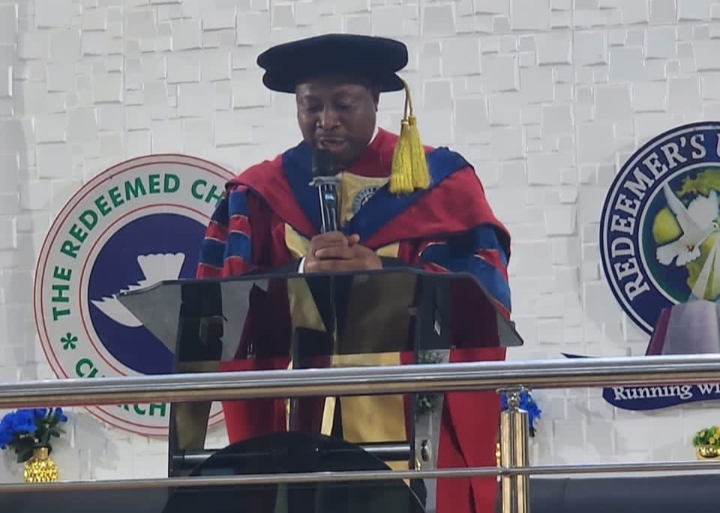
A Professor of Phytomedicine and Biochemical Toxicology at Redeemer’s University, Chiagoziem Anariochi Otuechere, has called for the establishment of well-equipped biomedical research centres across Nigeria to accelerate medical innovation and improve healthcare delivery.
Otuechere made the call on Tuesday while delivering the university’s 25th inaugural lecture, titled “Nature, Nanomedicine and Numbers: The Salubrious Odyssey of a Toxicologist.”
The don, who lectures in the Department of Biochemistry, Faculty of Basic Medical Sciences, advocated a multidisciplinary approach to biomedical research, combining natural medicine, nanotechnology, computational science and toxicology to develop safer, more effective and affordable treatments.
Reflecting on his academic journey and the prospects of scientific innovation, Otuechere said the future of healthcare depended on collaboration across scientific disciplines rather than isolated research efforts.
“My odyssey has convinced me that the future of healthcare lies not within a single discipline, but at the intersection of disciplines. Nature provides the molecules. Nanotechnology enhances their delivery while Computational science predicts their behaviour and toxicology ensures their safety. Together, they form a powerful platform for developing safer, more effective, and affordable therapies. As I reflect on this journey, I recognise that scientific discovery is never a destination as every answer generates new question”
To translate scientific discoveries into practical healthcare solutions, the professor recommended the establishment of two Centres of Excellence in Biomedical Research in each of Nigeria’s six geopolitical zones.
He said the centres should be equipped with modern research facilities and made accessible to scientists throughout the year to encourage sustained experimentation, collaboration and innovation.
“I recommend the establishment of two well-equipped Centres of Excellence in Biomedical Research in each of the six geopolitical zones of Nigeria. These centres should be furnished with state-of-the-art equipment and facilities, with a structured, all year-round access to scientists across the biomedical disciplines.”
Otuechere also called for a presidential mandate to empower accomplished biomedical researchers through sustainable funding and transparent accountability frameworks.
He said such an initiative should prioritise the development of healthcare solutions that draw on Nigeria’s indigenous knowledge systems and rich ethnopharmacological heritage, particularly its traditional knowledge of medicinal plants and their therapeutic potential.
“There should be a presidential mandate to empower biomedical researchers of proven pedigree. Such a mandate must be backed by sustainable funding and clear accountability frameworks. These researchers should be tasked with developing solutions that draw upon indigenous knowledge systems. This approach will not only valorize Nigeria’s rich ethnopharmacological heritage but also ensure that solutions are culturally relevant and economically viable.”
The professor further stressed the need to end the practice of conducting research in isolated disciplines, urging scientists and medical professionals to work together to ensure that laboratory discoveries translate into meaningful healthcare outcomes.
He called for stronger collaboration among toxicologists, chemists, physicians, microbiologists and other specialists, noting that interdisciplinary research would help bridge the gap between scientific innovation and patient care.
“I urge that transdisciplinary research be encouraged at all levels. Toxicologists, Chemists, Physicians, Microbiologists and other scientists should not work in silos. Instead, they should converge in collaborative platforms that accelerate translation of research from bench to the bedside. Such integration will ensure that discoveries in the laboratory are patient-relevant, and capable of bridging the gap between innovation and impact”.
The inaugural lecture provided a platform for Otuechere to reflect on his professional journey and highlight opportunities for scientific collaboration, research investment and the development of healthcare solutions tailored to Nigeria’s needs.