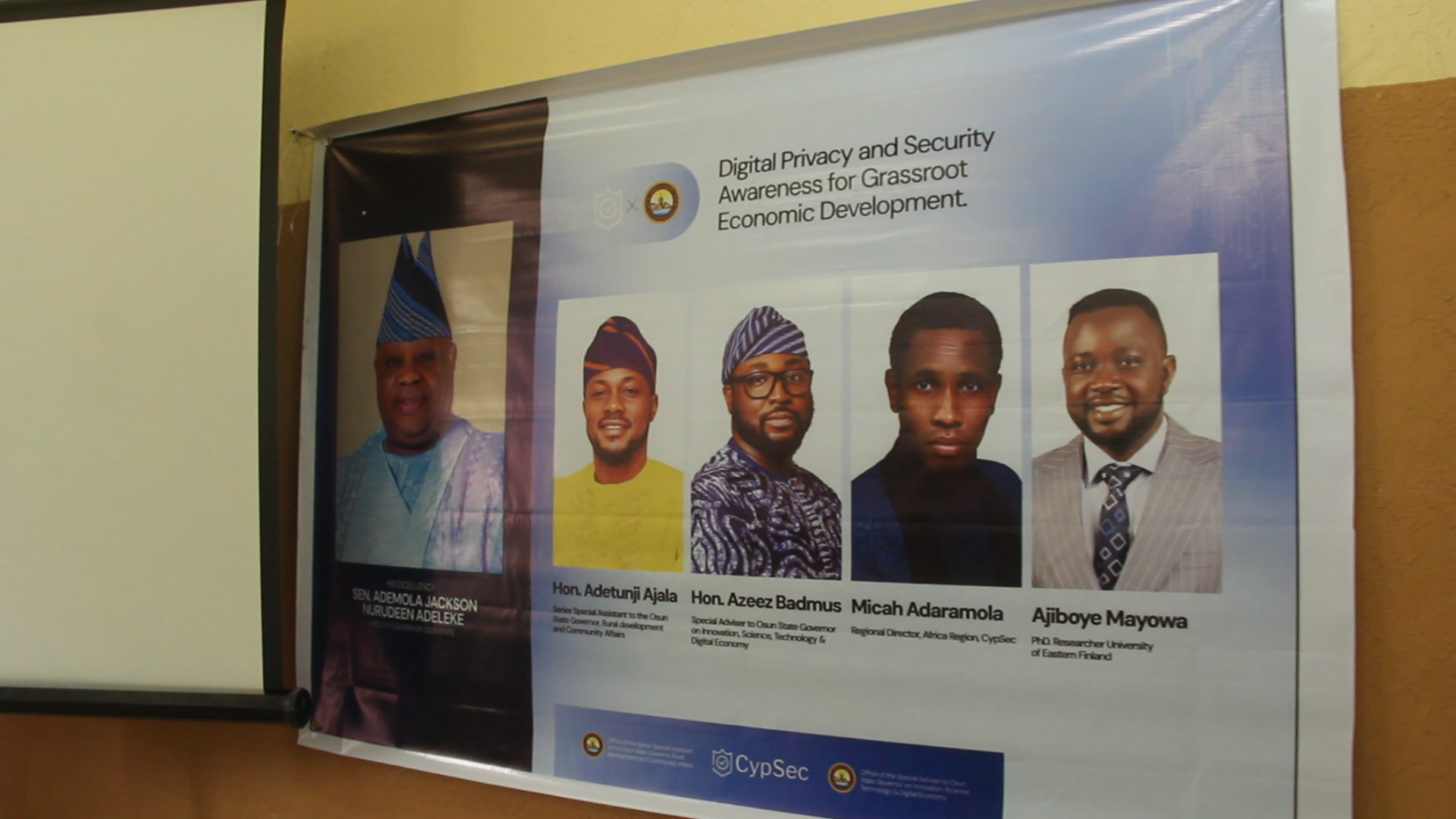
With rising cases of cyber fraud and data theft, the Osun State Government has partnered with experts to launch a grassroots campaign aimed at equipping citizens with digital security skills.
At the awareness program held in Osogbo on Thursday, facilitators warned that without proper knowledge of cybersecurity, many Nigerians especially market women, farmers, and traders remain vulnerable to exploitation in the digital space.
The Special Adviser to the Governor on Innovation, Science, Technology, and Digital Economy, Badmus Azeez, said the program is part of the state’s broader digital agenda, while also reassuring residents that the recently launched Imole Wi-Fi is safe to use.
“Today’s program is about digital literacy, specifically awareness on how to protect personal data and information, there are many digital pirates out there ready to exploit your information and cause economic damage through scams.
“This awareness program aims to educate people on identifying scams and protecting their data.
Recently, we launched the Imole Wi-Fi and it is safe to use. No system is perfect, but it’s designed to enhance people’s digital access to the global world”, he assured.
- Hon. Adetunji Ajala, Senior Special Assistant to the Governor of Osun State on Rural Development and Community Affairs, noted that the program was designed to raise grassroots awareness about digital security. He said the initiative was in partnership with the Ministry of Information and Technology and would empower communities to better understand digital risks.
“The purpose of this awareness is to create more awareness about digital security, for people to be aware of things going on in the digital space and the consciousness that needs to be put in place, most especially when you look at Nigeria, especially Osun State, with the new digital trends going on.
“There are things that people need to know in terms of taking their security very seriously, most especially, and how to cascade this understanding to the grassroots. Most people in the market are victims of scams, so we need to reach them. From this conversation, we have what we call ‘train the trainer.’ There are people here who can take this advocacy to market women, farmers, and traders”, Ajala stated.
Micah Adaramola, Regional Director for CyberSec African Region, said the program should not only create awareness but also give people hands-on training to shield themselves from cyber threats.
“The information needs to reach various demographics: the aged, women, men, and young people with limited knowledge of technology, digital privacy, and security, one way to get this information to them is to cascade it through technological apps and conduct more workshops like this. Aside from awareness, we want people to have hands-on experience and skills to protect themselves. That’s what we’re aiming to achieve”.
One of the Facilitators who spoke at the event, Ajiboye Mayorwa, said that many people risk being exploited in different ways if they fail to equip themselves with the right knowledge of digital safety. He explained that protecting one’s data begins with acquiring digital literacy skills and applying basic security measures.
“Basically, the danger they face is the fact that they will be exploited for sure, and exploitation could come in different degrees, What I believe they need to do is to equip themselves so that they will not be exploited.
” Like I said, exploitation can range in different degrees. Now, it depends on them to ascertain the level at which they don’t want to be exploited, else they will be exploited.How they can protect themselves is to ensure that first and foremost, they are digitally literate when it comes to cybersecurity or when it comes to digital privacy and security.
“Getting the necessary skills and ensuring that their devices are protected, their passwords, two-factor authentication, multi-factor authentication. And above all, try as much as they can to avoid what we call social engineering. So, in this direction, they will be able to get themselves protected, and they will not be exploited anymore”, he explained.
Advertisement