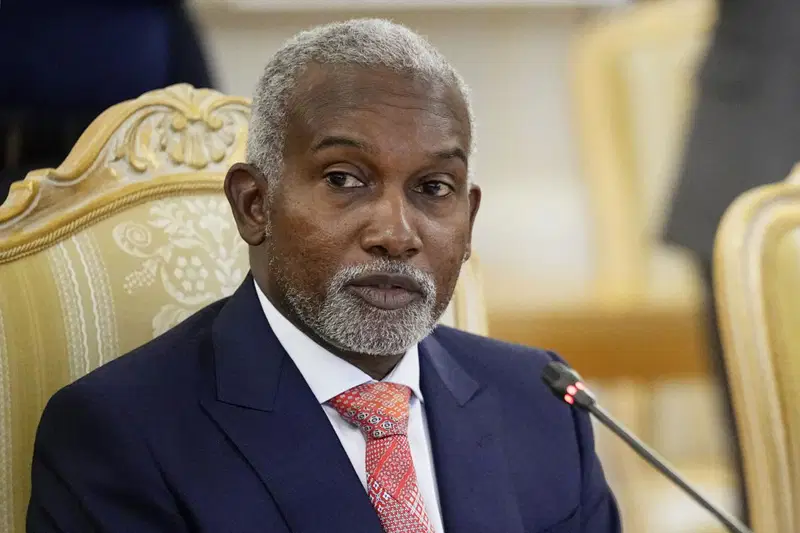
Nigeria’s Minister of Foreign Affairs, Yusuf Tuggar, has unveiled the country’s three major foreign policy priorities for 2026, saying the nation’s diplomatic engagements will revolve around strategic autonomy, regional stability and responsible global partnerships.
Tuggar made this known on Tuesday during the New Year Reception for Ambassadors and Heads of Mission in Abuja, where he reaffirmed Nigeria’s commitment to constructive diplomacy and deeper international cooperation.
According to him, although the annual diplomatic reception was held later than usual due to other pressing engagements, Nigeria remains focused on strengthening its global standing in a rapidly shifting geopolitical environment.
“As we look towards 2026, Nigeria’s foreign policy will be anchored on three priorities: strategic autonomy, regional stability, and responsible global partnership,” the minister said.
He stressed that at a time of growing geopolitical tensions and global realignments, Nigeria would continue to promote dialogue and cooperation over division and confrontation.
Tuggar also acknowledged ambassadors who recently concluded their diplomatic assignments in Nigeria, commending them for their contributions to strengthening bilateral relations.
He formally welcomed ambassadors-designate from Qatar, Lebanon, Namibia, Sudan and Saudi Arabia, expressing optimism about fostering closer ties based on mutual respect and shared interests.
In a move aimed at improving diplomatic efficiency, the minister announced adjustments to existing procedures. He explained that once ambassadors-designate present copies of their letters of credence to the Chief of Protocol, they can commence official duties except for formal engagements involving the President and Vice President. The reform, he said, would streamline diplomatic interactions.
Economic Diplomacy and Global Partnerships
On economic diplomacy, Tuggar noted that Nigeria intensified investment outreach and high-level bilateral engagements in 2025 across key sectors such as infrastructure, agriculture, energy and digital connectivity.
He highlighted strengthened partnerships across the Global South, the Middle East, the European Union, the United States and China, covering trade, education, climate action and security cooperation.
The minister emphasised that security and stability in the Sahel region would remain central to Nigeria’s diplomatic agenda in 2026, citing the resurgence of terrorist activities as a threat to regional prosperity and investor confidence.
“Beyond recent political developments, we remain neighbours with a shared responsibility for the safety and prosperity of our peoples. This is our region, and we must ensure that it works for all,” he said.
Tuggar also referenced the recent release of the 2027 election timetable by the Independent National Electoral Commission, noting that Nigeria is entering another critical democratic phase. He assured that the country’s democratic institutions would continue to receive support through international collaboration.
Expressing optimism about the economy, the minister said macroeconomic indicators suggest that Nigeria has turned a corner, pointing to a unified foreign exchange regime and policy reforms aimed at stabilising the business environment.
Reaffirming Nigeria’s commitment to multilateralism, Tuggar described it as the most credible framework for tackling global challenges. He also sought diplomatic backing for Nigeria’s bid for key international positions, including a non-permanent seat on the United Nations Security Council for 2030.
“Diplomacy builds bridges, reduces misunderstanding, and advances shared prosperity. Nigeria stands ready to continue that work with you,” he added.