
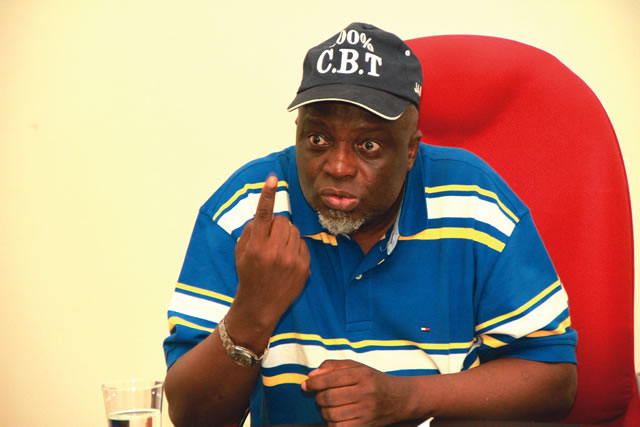
The Registrar of the Joint Admissions and Matriculation Board (JAMB), Professor Ishaq Oloyede, has responded firmly to calls for his resignation following challenges experienced during the 2025 Unified Tertiary Matriculation Examination (UTME).
Speaking at a stakeholders’ meeting in Abuja that included chief external examiners and representatives from civil society organizations, Professor Oloyede dismissed the calls, asserting that his critics lack the expertise to assess his leadership.
“Truck pushers cannot direct pilots,” he remarked, suggesting that many of those demanding his resignation are not qualified to speak on educational administration.
The remarks come amid pressure from some quarters, particularly the South-East Caucus of the House of Representatives, over issues that marred this year’s UTME.
In response to concerns about affected candidates, the Registrar announced that JAMB will conduct a special mop-up examination for candidates who missed the 2025 UTME due to legitimate reasons representing approximately 5.6% of all candidates.
“We are creating a new mop-up exam. Even those who missed the earlier test due to absence will get another opportunity. Makeup exams are standard practice in academic environments,” Oloyede explained.
He reaffirmed JAMB’s commitment to fairness and inclusivity, emphasizing that no candidate will be unfairly excluded from the examination process.
Addressing allegations of ethnic bias and administrative failures, Oloyede rejected the accusations, labeling them as baseless and politically motivated.
“People ask, ‘Where is he from?’ that has never influenced my decisions. I choose people based on merit, not ethnicity. These conspiracy theories are unfounded,” he said, urging the media and public to avoid politicizing educational matters.
The Registrar also clarified that the UTME is a placement tool, not a definitive measure of intelligence.
“UTME is designed to rank candidates for limited admission slots in tertiary institutions. It is not the ultimate assessment of a student’s potential or intelligence,” he noted, adding that final admissions consider several criteria, including institutional assessments and post-UTME scores.
Speaking emotionally, Oloyede addressed the tragic suicide of 19-year-old candidate Opesusi Timilehin, who took her life after receiving a low UTME score. He led a moment of silence in her memory and revealed he had considered resigning in the aftermath.
“When the incident occurred, my immediate thought was to step down. But I was advised against it. People told me the students would see it as abandonment in a time of need,” he recounted.
He also decried instances of misinformation, noting that some individuals falsely claimed their children had died in an attempt to solicit money.
Although stakeholders anticipated the release of the rescheduled UTME results on Wednesday, Professor Oloyede did not address the timeline during the meeting. However, JAMB spokesperson Dr. Fabian Benjamin later assured the public that the results would be released soon via an official statement.
In closing, Oloyede expressed appreciation to stakeholders and reiterated his commitment to accountability and improvement in the examination process.
“Let us not allow opportunists to exploit our challenges for personal or political gain. We remain committed to rectifying issues and building an examination system that Nigeria can take pride in.”
Advertisement