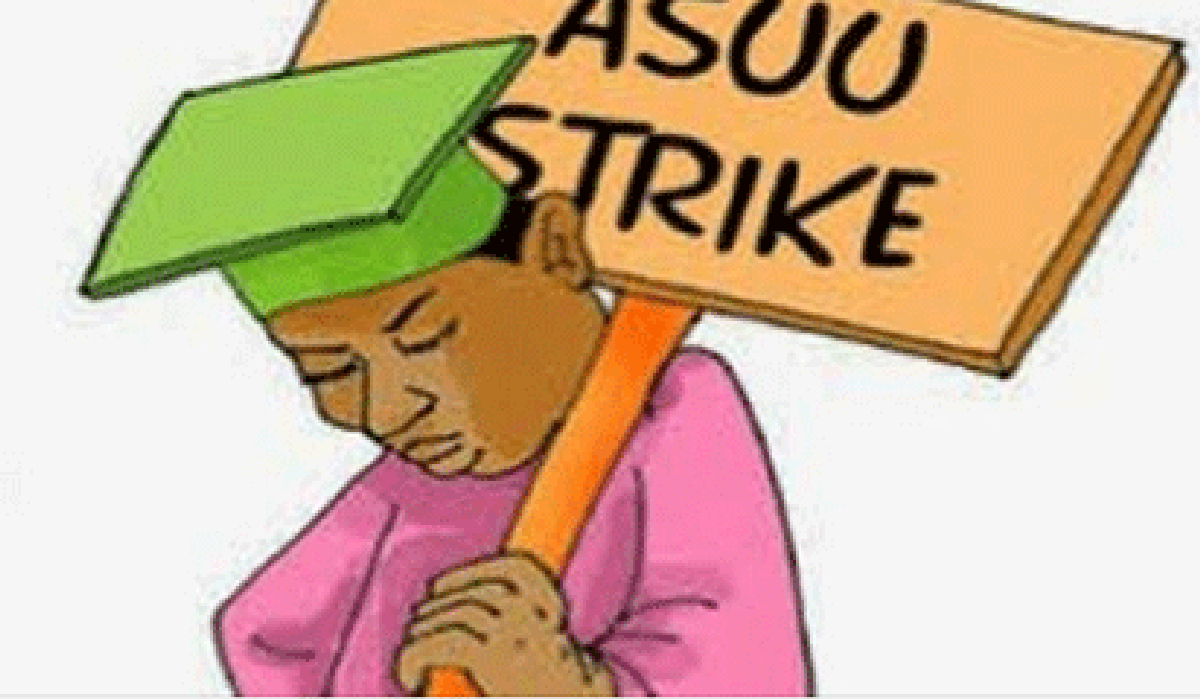
The Academic Staff Union of Universities (ASUU) has raised alarm over the deteriorating conditions of university lecturers in Nigeria, warning that a fresh strike may be unavoidable if the Federal Government fails to fulfill its promises.
In a statement signed by ASUU National President, Prof. Chris Piwuna, the union said it has reached a breaking point, stressing that its members are teaching under extremely harsh conditions including going without food.
“Lecturers in Nigerian public universities are, to put it mildly, not happy,” the statement read. “They teach students on empty stomachs. They conduct research in poorly equipped libraries and labs lacking essential books, journals, chemicals, and reagents. They work in dilapidated vehicles while struggling to pay utility bills, children’s school fees, rent, and other basic responsibilities.”
Despite these conditions, the Minister of Education, Dr. Tunji Alausa, recently claimed that strikes by university unions are a thing of the past, citing ongoing dialogue and improved relationships with union leaders.
While ASUU welcomed the sentiment, it emphasized that words alone are not enough tangible action is needed.
“Our members feel forgotten, shamed, and demoralized by past and present governments,” the union said. “Meanwhile, elites are quick to blame universities for producing ‘unemployable graduates’ and failing to drive innovation.”
ASUU also pointed to the long-delayed renegotiation of the 2009 FGN-ASUU Agreement, noting that the latest draft submitted by the Yayale Ahmed-led committee has been ignored for eight months.
The union described the government’s inconsistent approach to collective bargaining as a major contributor to the crisis in the university system.
“All major disputes between ASUU and the government since 2012 stem from the failure to honor agreements on conditions of service, funding, university autonomy, and academic freedom,” the statement added.
“Successive administrations have ignored the fundamental principles of the agreement, offering token responses instead of meaningful reform.”
ASUU concluded with a warning: unless urgent steps are taken to address these long-standing issues, a strike may be inevitable.
Advertisement