The Joint Admissions and Matriculation Board (JAMB) has once again sounded the alarm over the rising incidence of examination malpractice during the 2025 Unified Tertiary Matriculation Examination (UTME).
The board’s Special Committee on Examination Infractions has identified parents as responsible for about 80 percent of the cheating cases recorded.
Chairman of the committee, Jake Epelle, made the startling claim during an appearance on Monday’s episode of Channels Television’s Politics Today. He explained that many parents are directly involved in efforts to boost their children’s scores unfairly.
“Eighty percent of these infractions are caused by parents who want to give marks to their children that they don’t deserve,” Epelle stated.
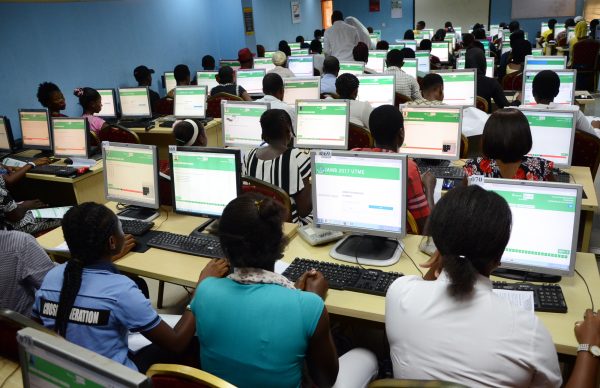
The UTME is the key gateway for admission into Nigerian universities, polytechnics, and colleges of education. Despite JAMB’s transition to a Computer-Based Test (CBT) system aimed at curbing fraud, examination malpractice continues to pose serious challenges.
Over the years, JAMB has invested in advanced security technologies to tackle issues like impersonation and credential forgery. However, the 2025 UTME has unveiled more complex fraud techniques involving artificial intelligence and organized syndicates.
The committee’s investigation uncovered 4,251 cases of “finger blending,” a form of biometric manipulation, and 190 cases where AI-assisted impersonation involved morphing candidates’ images.
Additionally, there were 1,878 false disability claims, multiple registrations with fake National Identification Numbers, forged certificates, and numerous instances of collusion between candidates and criminal groups.
Epelle emphasized that the rise of technology-fueled cheating methods is making it increasingly difficult to maintain the integrity of national exams.
“This is the age of AI. While JAMB deploys cutting-edge technology, there are smart individuals working behind the scenes to undermine the system,” he explained.
He also highlighted the need for homegrown technological solutions tailored to Nigeria’s unique challenges rather than relying solely on imported tools.
“Every technology has its flaws, which is why I advocate for adaptive technology solutions designed specifically for our environment and challenges,” Epelle added.
Advertisement