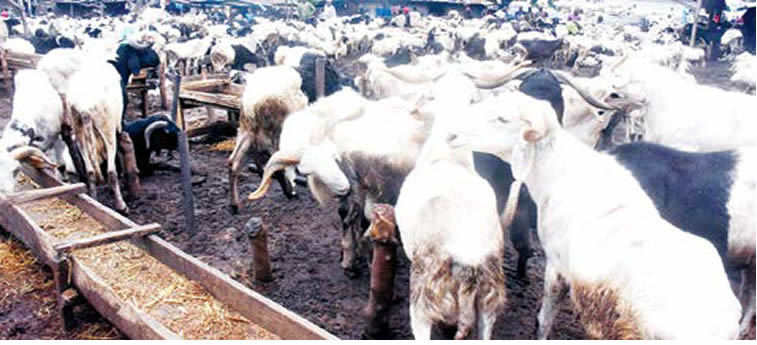
With just few days to the 2026 Eid-el-Adha celebration, many Muslim families across parts of Nigeria are struggling to cope with the soaring prices of rams, raising fears that this year’s Sallah festivities may be less colourful than usual.
Findings from major livestock markets in Ogun, Kebbi and Sokoto states showed that although rams are readily available, many buyers are unable to afford them due to the harsh economic situation and rising cost of living.
At popular markets such as Kara along the Lagos-Ibadan Expressway, as well as Ambursa, Kalgo, Achida, Bodinga and Wamakko markets in the North-West, traders displayed large numbers of animals while buyers moved around cautiously, bargaining without making purchases.
In Kebbi State, small-sized rams were sold for between N100,000 and N200,000, while medium-sized ones cost between N300,000 and N500,000. Bigger breeds were priced as high as N1m.
Residents lamented that the prices had almost doubled compared to last year’s Sallah season.
A resident of Birnin Kebbi, Ibrahim Sulaiman, described the situation as frustrating for many families preparing for the festival.
“This year is very difficult. What we bought for around N250,000 last year is now close to N500,000. We are just hoping the prices will reduce before Sallah,” he said.
Another buyer, Umar Aliero, said many civil servants were finding it hard to balance family needs with the rising cost of sacrificial animals.
“School fees, feeding and transportation are already taking most of our income. Buying a ram now requires serious planning,” he lamented.
Similar concerns were expressed in Sokoto State, where many residents said the high prices might force families to contribute money together to purchase a single ram.
“The prices are beyond the reach of ordinary workers,” a buyer at Kara Market, Musa Abdullahi, said.
Livestock traders, however, blamed the increase on the rising cost of transportation, insecurity along supply routes, expensive animal feed and multiple levies imposed on livestock movement across states and neighbouring countries.
A trader at Ambursa Market, Alhaji Sale Unable, said sellers were also battling harsh business conditions.
“We are not happy increasing prices, but transportation and feeding costs have gone very high,” he explained.
In Ogun State, traders at the Kara ram market also complained about poor patronage despite the availability of animals.
One of the dealers, Umaru Adamu, said rams were being sold for between N200,000 and N1.5m depending on size and breed.
Another trader, Umaru Yusuf, linked the situation to rising logistics expenses involved in transporting animals from northern Nigeria and neighbouring countries such as Chad.
Beyond the rising ram prices, heavy traffic congestion also disrupted movement along the Lagos-Ibadan Expressway on Saturday as travellers and traders trooped into Lagos ahead of the celebration.
Commuters were stranded for hours as traffic built up around Kara Market and adjoining areas, forcing some passengers to trek long distances to meet appointments and reach their destinations.