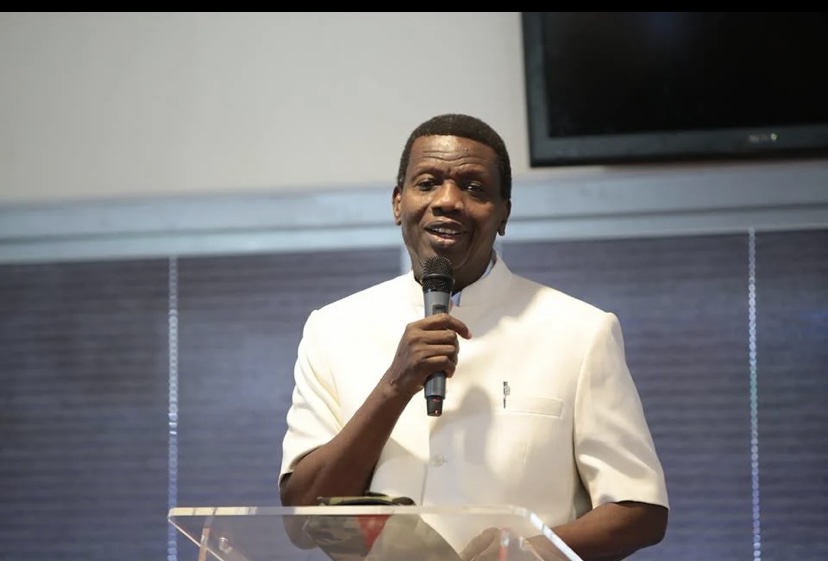
The Continental Overseer of the Redeemed Christian Church of God for Continent 3, covering South-West Nigeria and the Middle East, Pastor Joseph Odesola, has urged Nigerians to stop pressuring the General Overseer of the church, Pastor Enoch Adeboye, to publicly criticise President Bola Tinubu.
Odesola said Adeboye would speak on the country’s political and economic situation when he believed the time was right, insisting that the respected cleric should not be forced to follow a script written by politicians, critics or members of the public.
He expressed the position in an article published by Impact Nigeria on Monday and shared on his X account with the caption, “Pastor E.A. Adeboye Will Speak Only When God Says Speak.”
According to Odesola, there has been growing pressure on Adeboye and other religious leaders to comment on the Tinubu administration, with some Nigerians seemingly expecting the RCCG leader to condemn the President in strong terms.
“Some people are waiting eagerly for Pastor Enoch Adejare Adeboye to speak about President Bola Ahmed Tinubu. But it appears that they are not merely waiting for him to speak; they already have a script they want him to follow,” he said.
The cleric said some people wanted Adeboye to insult Tinubu, condemn his administration or make religious pronouncements against the President, but argued that such expectations were inconsistent with the responsibility of a genuine religious leader.
“But that is not Pastor Adeboye. And, more importantly, that is not how a responsible servant of God should operate,” he stated.
Odesola maintained that Adeboye had spent decades building his reputation around prayer, conviction and spiritual responsibility and should therefore not be expected to make public statements simply because people were demanding them.
“A man of God does not have to speak simply because people are demanding that he speak,” he said.
“There is a difference between speaking because the crowd is shouting and speaking because one has something meaningful to say.
“There is also a difference between political commentary and prophetic responsibility.”
The RCCG overseer said if Adeboye believed he had a message from God for the nation, he would speak, but that he could also choose to pray, counsel or remain silent depending on what he considered appropriate.
He cited the biblical principle that there is “a time to speak and a time to remain silent,” urging Nigerians to allow the cleric to exercise his judgment without pressure.
Odesola also warned against turning religious leaders into tools for advancing political interests, saying the church should be able to speak truth to power without becoming a political party or opposition platform.
“A genuine servant of God should not become the mouthpiece of any political camp,” he said.
He added that Adeboye should not be pressured to attack or insult Tinubu simply because some Nigerians believe that such a posture would demonstrate courage.
According to him, criticism of government does not have to be expressed through anger or insults.
“Truth does not become more powerful because it is delivered with insults. A curse does not become a prophecy simply because it is pronounced from a pulpit. And anger should never be mistaken for spiritual authority,” he said.
Odesola further argued that religious authority should not be measured by titles or public expectations, stressing that spiritual responsibility was personal.
He cited biblical figures including Moses, David, Amos and John the Baptist to illustrate his argument that the influence of a messenger was determined by the authority and substance of the message, rather than human expectations or titles.
The cleric also rejected the idea that Adeboye needed to make sensational statements to prove his courage or respond to social media pressure.
“Pastor Adeboye does not need to perform for social media. He does not need to say something sensational simply because Nigerians are waiting for a headline,” he said.
“He does not need to insult anybody to prove that he is courageous. He does not need to pronounce a curse to demonstrate that he has spiritual authority.”
However, Odesola acknowledged that Nigeria needs religious leaders to speak on issues affecting ordinary citizens, including poverty, insecurity, unemployment, rising living costs, education, healthcare and declining confidence in public institutions.
He said such interventions should be guided by responsibility rather than political sentiment.
“Nigeria needs voices that can tell the government the truth without hatred. We need voices that can challenge opposition politicians without fear.
“We need leaders who can comfort ordinary Nigerians who are struggling,” he said.
Odesola urged Nigerians to give Adeboye the freedom to pray, listen and discern before deciding whether to make a public statement about the administration.
“Let Pastor Adeboye pray. Let him listen. Let him discern. And when he has something he believes God has instructed him to say, let him say it with the courage of conviction,” he said.
He argued that Adeboye’s decision not to make the statement some Nigerians expect should not automatically be interpreted as a failure of leadership.
“A servant of God is not called to satisfy the expectations of the crowd. He is called to obey God,” Odesola said.
He therefore urged those waiting for Adeboye to attack Tinubu or issue a dramatic religious pronouncement to stop attempting to dictate what the cleric should say.
“Don’t write his script for him. He will speak when he believes he should speak. He will pray when he believes he should pray. And if God has not told him to say what the crowd wants to hear, he should have the courage to say nothing at all,” he said.
Odesola concluded that the strength of a religious leader should not be measured by how loudly or frequently he speaks, but by his faithfulness to his convictions and calling.
Adeboye has recently faced calls from some Nigerians to publicly comment on the policies of the Tinubu administration and the wider economic and political situation in the country.