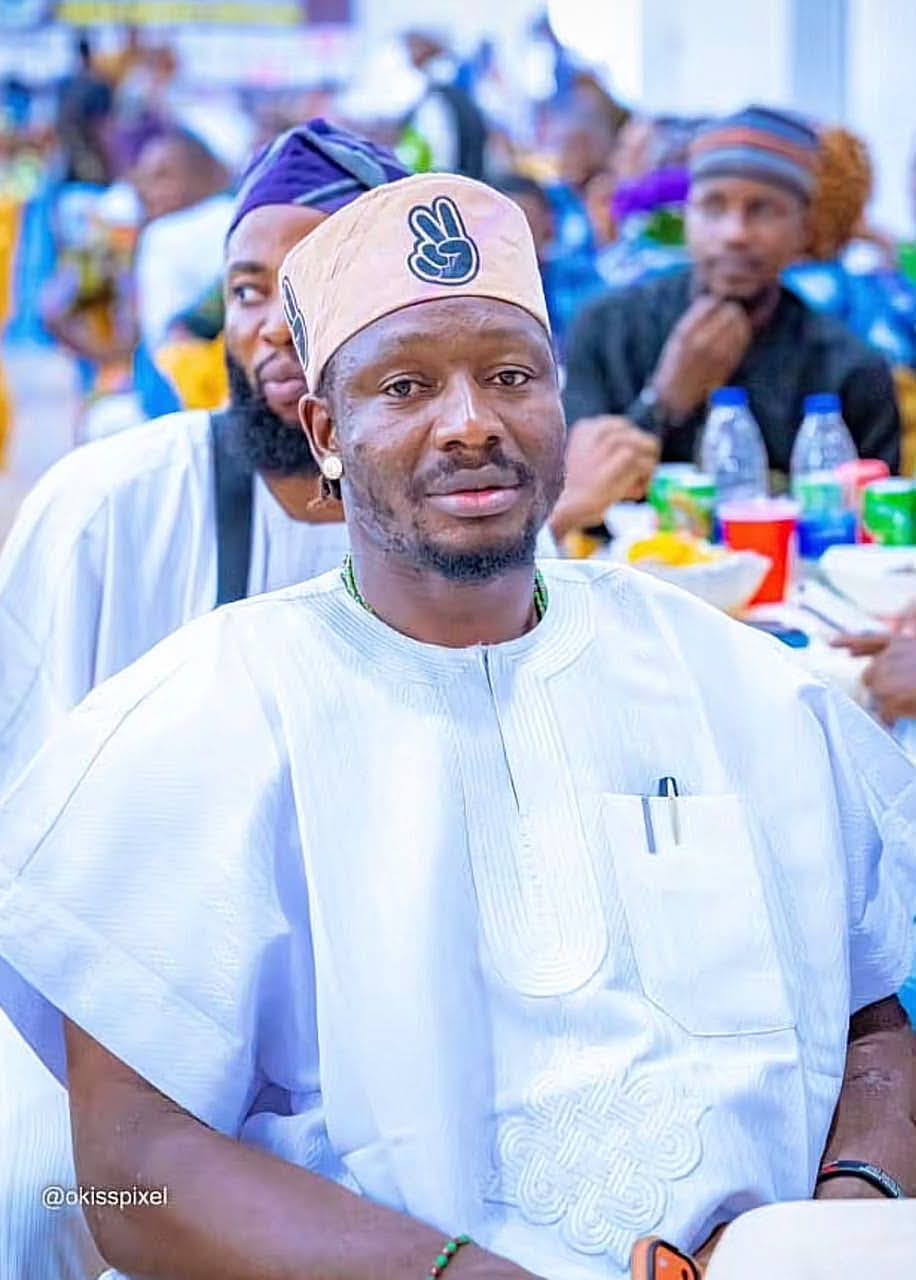
The killing of Olalekan Oyeyemi, popularly known as Ajagungbade Emir, in Ile-Ife should ordinarily be enough to make a society pause. Not only because a man has lost his life, but because of what the circumstances surrounding the incident appear to reveal about us. Here was a conflict reportedly emerging not between two entirely different political camps, but from within the same broader camp, over who would ultimately control the leadership of a transport union after the political victory they had collectively worked for. In other words, the battle was not simply about defeating the other side; it became a battle over who among the victors would inherit the territory. There is something profoundly tragic about people discovering, after winning together, that they have different definitions of what the victory was meant to achieve.
There is a larger history behind this. Human societies have repeatedly made the mistake of creating, recruiting or empowering men and groups of violence for purposes that appear useful at a particular moment. Sometimes they are needed to intimidate opponents, enforce political interests, protect territory or secure an election. The assumption is always that the men can be called upon when needed and dismissed when the work is finished. History repeatedly teaches otherwise. Violence is rarely a faithful servant. Give men weapons, money, influence and a justification for violence, and eventually they may begin to believe that the power belongs to them. The political sponsor may win the election, but the men who fought the battle may begin asking what their victory is worth to them. And when their expectations are disappointed, the weapon that was once pointed at an opponent can easily be turned towards the people who once gave the instruction.
Nigeria has seen different manifestations of this dangerous relationship between power and violence. Political thuggery, electoral violence, cultism, communal conflicts, kidnapping and organised criminality have not all emerged from one source, nor should their histories be carelessly conflated. Boko Haram has its own ideological and historical trajectory; banditry in the North-West has its own mixture of criminal enterprise, local grievances, proliferation of arms and failures of governance. Yet there is a common warning running through many of these experiences: when violence becomes organised, financed, profitable or socially tolerated, it can outgrow the purpose for which it was originally tolerated. What begins as an instrument can eventually become an institution. What was once somebody’s political machinery can become nobody’s machinery. And the society is then left wondering how to dismantle a monster it helped make powerful.
Perhaps the greater tragedy is that we often know this, yet continue to repeat the cycle. We condemn political thuggery when it is directed at our people and excuse it when it benefits us. We call a man a criminal when he is working for the opposition but describe him as a “loyalist” when he is protecting our own interests. We celebrate intimidation when our enemies are intimidated and demand law and order when the same method is eventually turned against us. This is the hypocrisy that makes violence particularly difficult to defeat. A society cannot consistently tell its young people that violence is wrong while rewarding violent men with access, influence, money and political relevance.
This selective morality extends far beyond politics. We have become increasingly comfortable with defending what favours us today and condemning the same thing when circumstances change tomorrow. Our outrage is often conditional. We mourn selectively. We defend selectively. We demand justice selectively. Yet justice that depends on whose son is involved is not justice; it is tribalism of the conscience. The older generation, for all its own shortcomings, understood something we appear to be forgetting: a child was not always protected from correction simply because he belonged to you. An elder could tell his own son, his neighbour’s son or the community’s son that he was wrong. There was wisdom in that tradition. If you love your own people, you must sometimes have the courage to tell them the truth they do not want to hear.
That principle has become increasingly difficult in an age where loyalty is often mistaken for unconditional defence. We have turned political parties, religious groups, professional associations, ethnic identities and even ordinary friendships into moral shelters where wrongdoing can hide. If the offender is “our person”, we search for explanations. If he belongs to another camp, we search for condemnation. But wrongdoing does not become less wrong because the wrongdoer is familiar. In fact, protecting the wrongdoing of those close to us may be one of the most dangerous forms of disloyalty. The friend who tells you the truth when everyone else is applauding you may be doing more for you than the friend who helps you escape accountability.
The Ile-Ife tragedy should therefore compel us to think beyond the immediate arguments over who started what, who belonged to which faction and who should ultimately control a particular office. Those questions matter to investigators and the justice system, but society must confront the deeper question: what are we teaching people about power? If political victory is understood as an opportunity to capture every available resource, influence and territory, then conflict becomes inevitable. If every office is treated as property to be inherited by whichever faction has the strongest muscle, then elections cease to be about service and become battles for possession. And once possession becomes the objective, the temptation to use violence becomes dangerously close.
The wisdom we need is not complicated, although practising it is. We must learn to condemn violence before it reaches our doorstep. We must stop celebrating men because they are useful to us today and pretending not to know what they are capable of tomorrow. We must teach our children and our political followers that strength is not the ability to frighten people, but the discipline to restrain oneself when one has the power to hurt them. And we must recover the courage of our fathers to tell our own people when they are wrong, because a community that cannot correct its own members eventually loses the moral authority to correct anybody.
Ajagungbade Emir’s death should not become another episode of mourning followed by forgetting. Let the law determine responsibility. Let justice take its course. But let society also examine the conditions that make such violence possible. The most dangerous violence is not always the violence we see; sometimes it is the violence we tolerate, finance, excuse and celebrate until it becomes strong enough to turn against us. A society that continually rents violence for its immediate convenience may eventually discover that the violence has stopped paying attention to the landlord. And when that happens, everyone becomes a potential victim, including those who once believed they were safely on the side of the gun.
—
Bolaji Olabode is a public affairs analyst and commentator on governance, democracy and national cohesion. He writes on political accountability, institutional reform and the intersection of leadership and national unity in Nigeria.