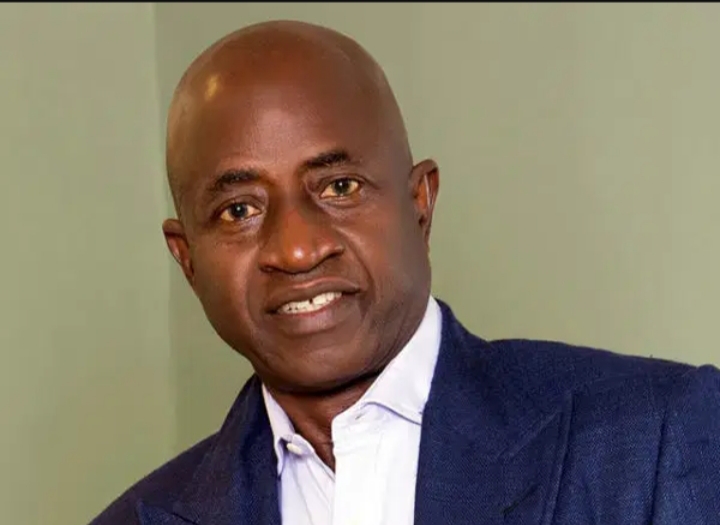
Former Nigeria international Segun Odegbami has described the current state of Nigerian football as the “worst time” in the country’s history, blaming years of poor administration and inadequate investment in the sport.
Odegbami, a member of Nigeria’s first Africa Cup of Nations-winning team in 1980, spoke to BBC Sport Africa as the Super Eagles prepare to begin their 2027 AFCON qualifying campaign.
The former striker said the struggles of the national teams, domestic league and age-grade sides showed that Nigerian football was facing a major decline.
“Our girls, the Super Falcons, who were African champions, failed to win a competition that was just there for their taking. All our junior teams are not doing well,” Odegbami said.
“Our local league is not bringing in money. Something is definitely wrong.”
Nigeria’s failure to qualify for the 2022 and 2026 FIFA World Cups was also cited by the former international as evidence of the depth of the crisis.
“It has never been this bad in our entire history that we didn’t qualify for the World Cup,” he said.
Odegbami’s comments come amid major changes at the Nigeria Football Federation, where President Ibrahim Gusau, General Secretary Mohammed Sanusi and several members of the executive committee resigned last month following widespread calls for reforms.
The football icon said the country needed a comprehensive restructuring rather than simply changing individuals in the leadership of the federation.
“The outcry by Nigerians was total. Everybody wanted them out, to the extent that the President of the country himself, Bola Tinubu, made the pronouncement that he wanted reforms,” he said.
He added that ongoing discussions involving FIFA, CAF and the National Sports Commission could provide a foundation for a new development blueprint for Nigerian football.
Sports journalist Fisayo Dairo also told BBC Sport Africa that reforms should focus on building a sustainable structure for the sport, including grassroots development, national teams and stronger governance.
According to Dairo, the corporate sector should also be given a greater role in football development and funding.
Reflecting on his playing days, Odegbami said Nigeria once had strong government and public support for football, particularly during the period that produced the country’s first AFCON title in 1980.
“We had unprecedented support and fortunately the stars aligned with us. It was an indescribable atmosphere during that period,” he said.
Odegbami, popularly known as “Mathematical,” scored 23 goals in 47 appearances for Nigeria and helped the country defeat Algeria 3-0 in the 1980 AFCON final in Lagos.
He further criticised successive governments for failing to make sports development a priority and accused football administrators of neglecting key areas of the game, including grassroots development, player discovery, academies and club structures.
“The pilots are not guiding us well, they haven’t guided us well,” he said.
The former striker also expressed concern over the deterioration of football infrastructure across the country, citing the National Stadium in Lagos, Liberty Stadium in Ibadan, Ahmadu Bello Stadium in Kaduna and UJ Esuene Stadium in Calabar.
“I weep when I think of the amount of damage they have done to Nigerian football – the infrastructure that we had in the country, some of the historic monuments that were facilities for football in this country,” he said.
While describing the Godswill Akpabio Stadium in Uyo as Nigeria’s best football facility at present, Odegbami argued that it does not match the standard of some stadiums available in previous decades.
The Super Eagles are set to open their 2027 AFCON qualifying campaign against Madagascar at the Godswill Akpabio Stadium, Uyo, on Friday before travelling to Guinea-Bissau for their next fixture on September 29.
Nigeria will, however, be without Victor Osimhen, who has been ruled out of Eric Chelle’s squad due to injury.