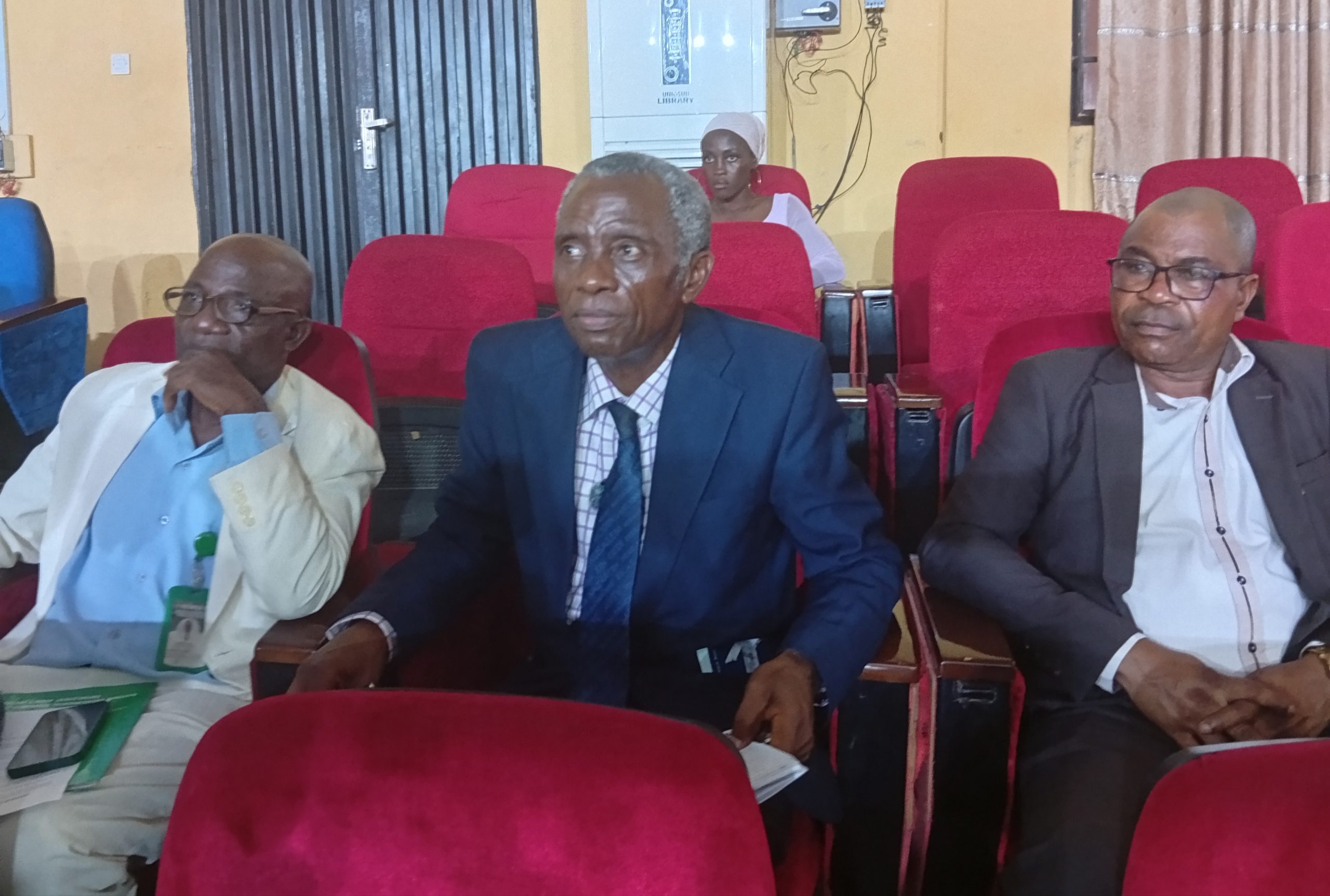
The LivingScience Foundation has called for improved disease prevention, better sanitation and reforms at the National Agency for Food and Drug Administration and Control (NAFDAC).
The experts made the call on Wednesday at its 11th National Conference on Environment and Health at Osun State University, Osogbo.
The conference brought together academics, environmental health practitioners and policymakers to explore ways of strengthening public health and safeguarding Nigeria’s food systems.
Themed “Safe Foods, Healthy Nation: Safeguarding Food Systems in Nigeria from Farm to Fork,” the conference focused on food safety, sanitation, disease prevention, public health education and institutional capacity.
Speaking at a press conference during the event, President of the LivingScience Foundation and Professor of Health Physics and Environment at Obafemi Awolowo University, Joshua Olufemi Ojo, called for a review of NAFDAC’s mandate and increased funding to strengthen its capacity to address public health challenges.
Ojo said the agency needed clearly defined responsibilities, adequate resources and structural reforms to improve its effectiveness in regulating food and other products that affect public health.
“NAFDAC cannot go beyond their mandate, but the mandate needs to be enlarged while the funding needed needs to be increased as well. My recommendation is that NAFDAC should be broken down, and the mandate should be well defined and well funded,” he said.
The professor also emphasised the importance of sanitation and environmental hygiene in preventing diseases, urging environmental health officers to step up their activities at the grassroots.
“The major determinant of health diseases is sanitation, and when you have better sanitation, health improves,” he said.
He added that although vaccines remained important in disease control, greater attention should be given to preventing illnesses before they occur.
“Vaccines have their own place, but preventing the disease is the most important, and that is why we want environmental health officers to do better in their job,” he added.
Addressing concerns about Ebola, Ojo urged government authorities, health professionals and the media to provide accurate public information without creating unnecessary panic.
“Ebola is a very serious issue. As much as we need to be serious with it, we must not create panic. What we need to do is to educate the public appropriately without causing unnecessary panic. I believe with appropriate education about it, we should conquer it,” he said.
Also speaking, President of the Environmental Health Association of Nigeria, South-West Zone, Dr Isaac Temitope Akinwumi, called for greater collaboration among health professionals, epidemiologists, the media and advocacy groups to prevent and contain disease outbreaks.
Recalling Nigeria’s response to the 2014 Ebola outbreak, Akinwumi said cooperation among relevant stakeholders was crucial to containing public health emergencies.
“Ebola is a re-emerging disease; it has come before in 2014, and you could see how we worked together to drive it away,” he said.
He added that a multidisciplinary approach involving the media, advocacy groups and epidemiologists was necessary to strengthen surveillance and contact tracing.
“We have started that again, and it is a multidisciplinary approach from media, advocacy, epidemiologists, and others to search the contact tracing, because there should not be any fear in it,” Akinwumi said.
Reiterating the importance of preventive healthcare, he maintained that adherence to recommended public health measures would help authorities contain potential outbreaks swiftly.
Akinwumi reiterated that “prevention is better than cure,” stressing the need for collective action to protect public health.
Ojo disclosed that the LivingScience Foundation had sustained the annual conference over the past ten editions without external funding, providing a platform for professionals from different sectors to exchange ideas and address environmental and public health challenges.
The conference is expected to strengthen collaboration among stakeholders and promote practical approaches to food safety, sanitation, disease prevention and environmental health, with the broader aim of building healthier communities across Nigeria.