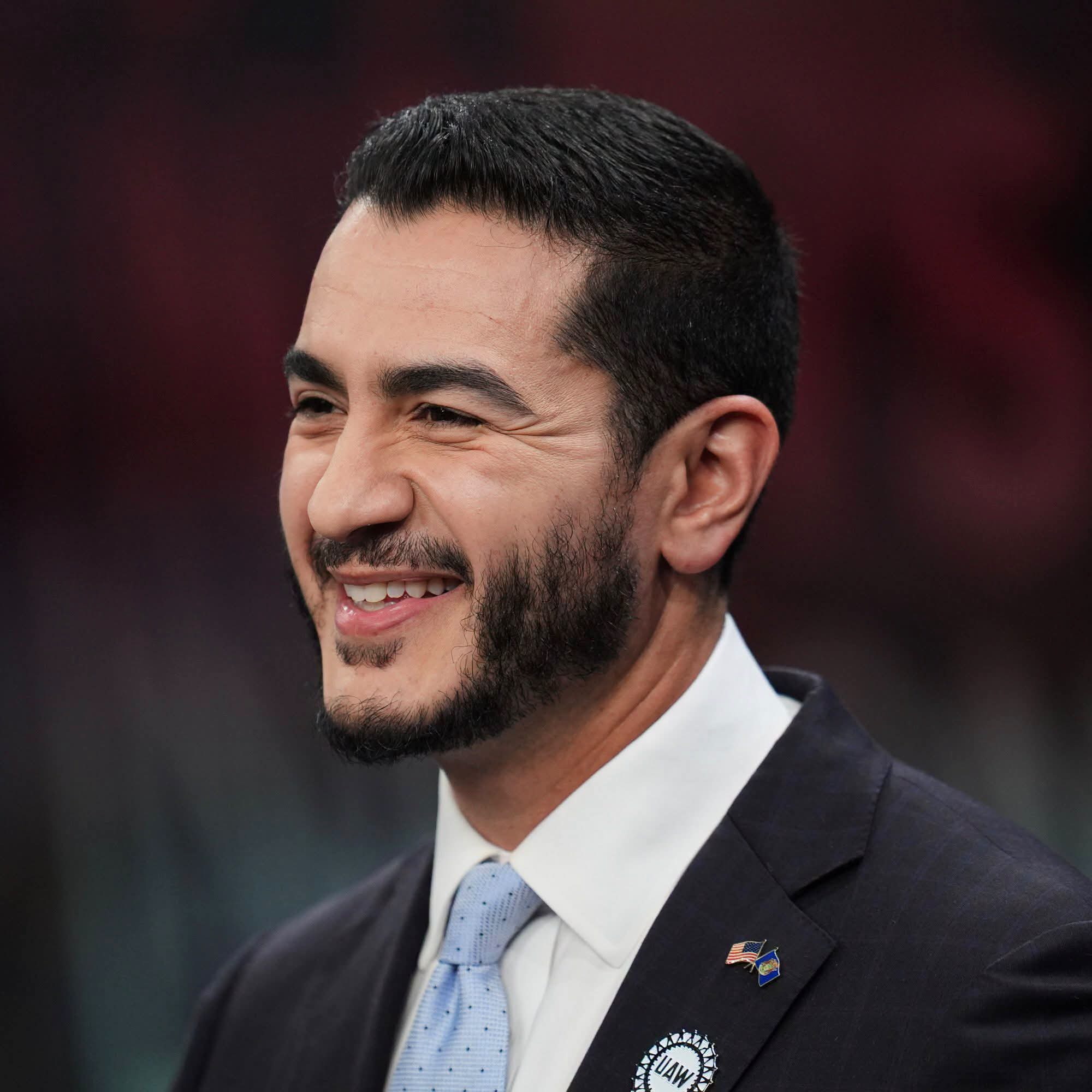
Democrat Abdul El-Sayed has made history in the United States after becoming the first Muslim elected to the US Senate, following his victory over former Republican Congressman Mike Rogers in Michigan’s closely watched midterm election.
Advertisement
The 42-year-old Egyptian-American’s victory, projected by US media on Tuesday, will see him occupy the Senate seat being vacated by retiring Democratic Senator Gary Peters when the new Congress begins in January.
His election marks a significant moment for Muslim representation in American politics, where Muslim Americans have previously made history in the House of Representatives but had yet to secure an elected seat in the Senate.
El-Sayed’s path to the Senate was preceded by a competitive Democratic primary in August, where he defeated Congresswoman Haley Stevens to emerge as the party’s candidate for the general election.
His campaign received backing from prominent progressive figures, including Senator Bernie Sanders, Congresswoman Alexandria Ocasio-Cortez and Michigan Representative Rashida Tlaib.
He centred his campaign on issues affecting ordinary Americans, promising to push for wider access to healthcare through Medicare for All, affordable housing, greater economic opportunities for working families and measures to reduce the influence of wealthy donors in politics.
His position on US support for Israel also became a major issue during the campaign. El-Sayed criticised American military assistance to Israel, described its military operations in Gaza as genocide and called for an end to unconditional US support.
The position exposed divisions within the Democratic Party, particularly after Stevens, whom he defeated in the primary, endorsed Republican candidate Rogers two days before the general election. She said her decision was influenced by concerns about El-Sayed’s campaign rhetoric and political associations, a move that attracted criticism from some Democrats.
El-Sayed rejected allegations linking him to extremism, arguing that such attacks were intended to distract voters from the economic challenges confronting Americans.
Born in Rochester Hills, Michigan, to Egyptian immigrant parents, El-Sayed built an academic and professional background in medicine and public health before entering politics.
He graduated from the University of Michigan in 2007 and earned a doctorate in public health from the University of Oxford in 2011 as a Rhodes Scholar. He later obtained his medical degree from Columbia University in 2014.
His public service career gained prominence in 2015 when he was appointed Detroit’s health director. He served until 2017, overseeing efforts to rebuild the city’s public health services following its financial crisis.
He later sought the Michigan governorship in 2018 but lost the Democratic primary to Gretchen Whitmer. Between 2023 and 2025, he also served as director of the Wayne County Department of Health, Human and Veterans Services.
His victory adds a new chapter to the growing political participation of Muslim Americans. Keith Ellison became the first Muslim elected to the US Congress in 2006, while Rashida Tlaib and Ilhan Omar made history in 2018 as the first Muslim women elected to the House of Representatives.
El-Sayed’s election to the Senate therefore represents a further milestone for a community whose political representation has continued to expand in the United States.