A legal storm has erupted in Osun State following proceedings in the ongoing criminal case involving the United Bank for Africa (UBA) and the Osun State Government over alleged unlawful release of local government funds.
The controversy centres on the actions of Senior Magistrate A. A. Adeyeba of Magistrate Court 5, Osogbo, whose rulings on Tuesday, February 10, 2026, have drawn sharp and opposing reactions from political parties and senior members of the legal profession.
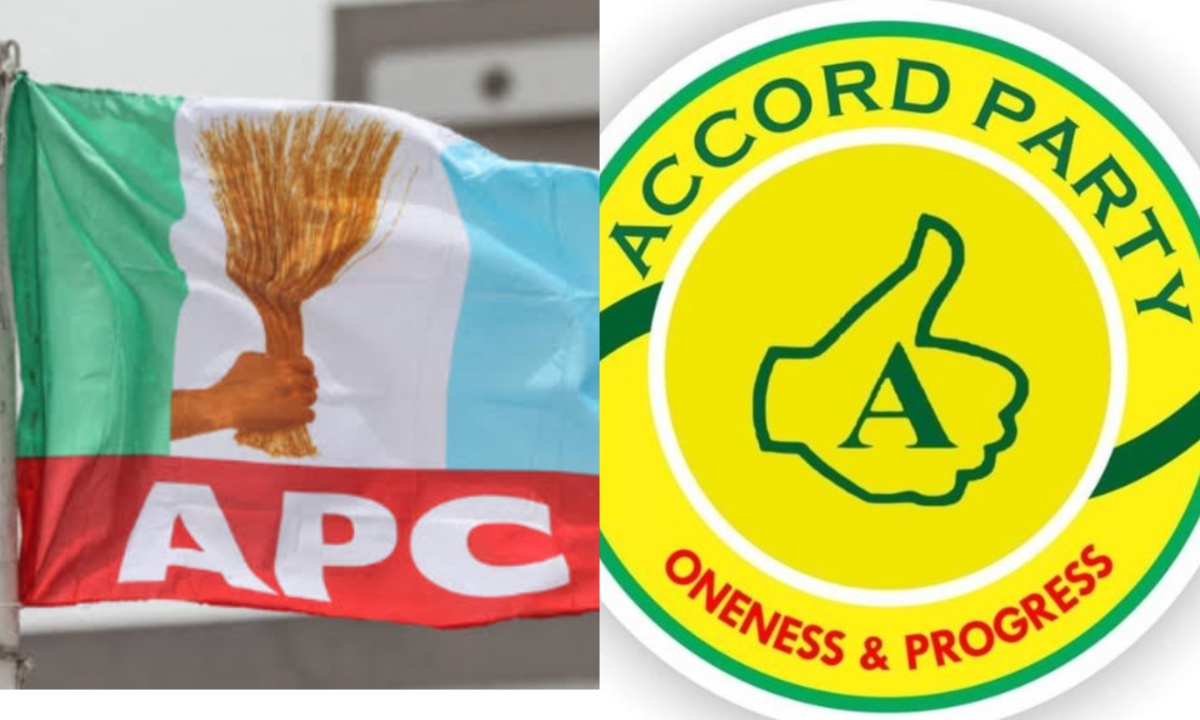
While the Osun State chapter of the Accord Party has come out strongly in defence of the magistrate, the All Progressives Congress (APC) has accused the judicial officer of misconduct and called for an urgent investigation by the Osun State Judicial Service Commission (JSC).
Accord defends magistrate, condemns alleged threat to bench
In a statement signed by its Osun State Chairman, Pastor Victor Akande, the Accord Party described attacks on Magistrate Adeyeba as an “assault on the bench” and condemned what it alleged was an open threat issued against the magistrate by a Senior Advocate of Nigeria, Dr Saka Layonu, during court proceedings.
The party said the magistrate acted within the law by refusing to stay the criminal proceedings against UBA, arguing that granting such a request would have violated Section 306 of the Administration of Criminal Justice Act (ACJA), which expressly prohibits stay of proceedings in criminal matters.
Accord maintained that Nigerian law is settled on the principle that criminal cases take precedence over civil actions arising from the same facts and accused UBA and the APC of attempting to stall the case through legal technicalities.
“The magistrate complied with the law and performed her statutory duty. What was demanded of her was a clear violation of the ACJA,” the party said.
Accord further called on the Nigerian Bar Association (NBA) and the Body of Benchers to initiate disciplinary action against Dr Layonu, accusing him of conduct unbecoming of a senior member of the bar.
APC accuses magistrate of disobeying High Court order
However, the Osun State APC painted a sharply different picture, accusing Magistrate Adeyeba of judicial lawlessness and contempt of a superior court order.
In a separate statement signed by the party’s Director of Media and Information, Mogaji Kola Olabisi, the APC said the magistrate ignored an existing High Court order directing a stay of proceedings and the transfer of the case file for possible quashing.
The party explained that after the magistrate issued bench warrants against UBA officials, the bank approached the High Court, which allegedly ordered that proceedings before the magistrate be stayed.
Despite being informed that the High Court order had been served, the magistrate reportedly went ahead to restrain UBA from releasing funds to local governments in Osun State and ordered the bank to enter a ₦1 billion bond.
According to APC, these orders were made despite the fact that the defendants had not been convicted and were constitutionally presumed innocent.
A senior legal practitioner who reviewed the proceedings described the magistrate’s actions as “legally indefensible,” arguing that once a superior court assumes jurisdiction, a lower court must halt further action.
Layonu defends judicial sanctity
The APC also defended the intervention of Dr Layonu, SAN, who reportedly rose in court to caution the magistrate against issuing orders after jurisdiction had allegedly been lost.
According to the APC, Layonu merely reminded the court that orders issued in defiance of a superior court directive are a nullity and insisted that his actions were aimed at protecting judicial integrity, not intimidating the bench.
The party has formally called on the Osun State Judicial Service Commission to investigate the conduct of the magistrate to safeguard the rule of law.
Legal community divided
The unfolding dispute has sharply divided legal and political observers, with some backing the magistrate’s reliance on the ACJA, while others insist that obedience to High Court orders is fundamental to judicial hierarchy.
As of the time of filing this report, neither the Osun State Judicial Service Commission nor the Nigerian Bar Association had issued an official response to the calls for investigation and disciplinary action.