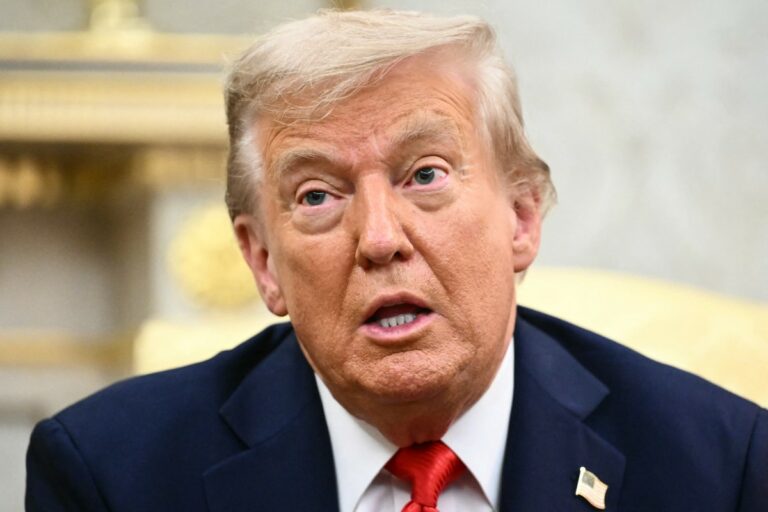
Donald Trump has said the United States is not ready to negotiate a deal to end the ongoing conflict with Iran, even as tensions in the region continue to escalate.
Speaking in an interview with NBC News, the US president suggested that although Tehran might be interested in negotiations, Washington would only consider talks if better conditions were offered.
Trump warned that American forces could intensify attacks on Iranian targets, including the strategic oil hub at Kharg Island, which plays a major role in the country’s oil exports.
The conflict, which has lasted for more than two weeks, involves military operations by the US and its ally Israel against the Islamic Republic. Despite rising casualties and economic pressure caused by surging global oil prices, both sides have continued to exchange threats.
“Iran wants to make a deal, but the terms are not good enough yet,” Trump said, adding that US forces could increase strikes along Iran’s coastline near the Strait of Hormuz to ensure oil shipments resume.
Meanwhile, Iran’s new supreme leader, Mojtaba Khamenei, has vowed to keep the crucial waterway closed. The strait is one of the world’s most important routes for global oil transportation.
Trump, however, dismissed the threat and even questioned whether the Iranian leader was still in control. Iranian authorities have insisted there is no issue with Khamenei’s leadership despite his absence from public appearances.
At the same time, the Israeli military said it carried out fresh airstrikes on targets in western Iran. The escalation came after Iran’s Revolutionary Guards labelled Israeli Prime Minister Benjamin Netanyahu a criminal and threatened to track him down.
Despite the tense rhetoric and continued fighting, some signs of normal life have begun to return in Tehran.
Residents were seen going about their daily activities as traffic increased and several cafes and restaurants reopened. At the popular Tajrish Bazaar, many stalls resumed business ahead of Nowruz celebrations.
People were also seen lining up at ATMs to withdraw cash after online services of Bank Melli were disrupted in recent days.
International concerns grow
The US government has advised its citizens to leave Iraq following attacks by pro-Iranian groups on American diplomatic facilities and military bases.
Trump has also suggested forming an international naval coalition to escort oil tankers through the Strait of Hormuz to stabilise global oil supply. He called on countries such as China, France, Japan, South Korea and the United Kingdom to contribute naval vessels to secure the route.
Officials in several countries have responded cautiously, saying discussions with allies are ongoing about possible measures to protect shipping in the region.
Meanwhile, air defence systems in Bahrain and Saudi Arabia intercepted new waves of missiles, while authorities in Dubai reported similar defensive actions following Iranian warnings to avoid port areas.
According to Iran’s health ministry, more than 1,200 people have been killed since the conflict began, though the figures have not been independently verified.
The United Nations High Commissioner for Refugees estimates that about 3.2 million people have been displaced, with many fleeing Tehran and other major cities.
The United States Department of Defense, also known as the Pentagon, says more than 15,000 targets in Iran have been struck so far by US and Israeli forces.
US media reports also indicate that the amphibious assault ship USS Tripoli, along with about 2,500 Marines, has been deployed to the region as tensions continue to rise.