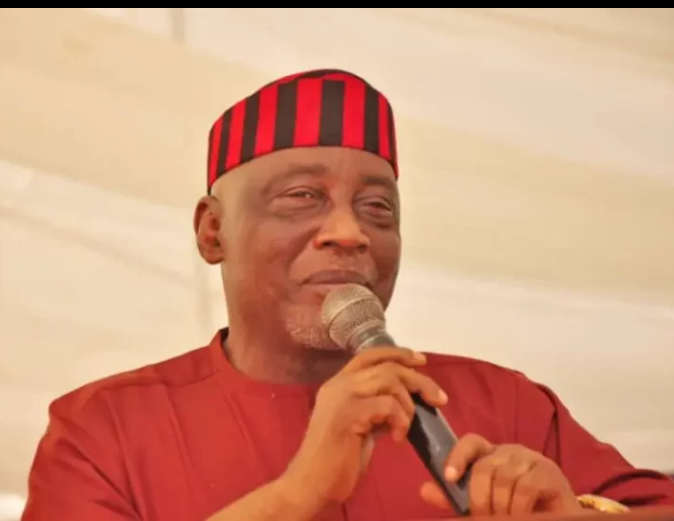
The Senate Minority Leader, Abba Moro, has criticised the African Democratic Congress over its demand for the resignation of the Chairman of the Independent National Electoral Commission, Amupitan Joash, warning that such calls could escalate political tension in the country.
Speaking during an interview on Arise Television, Moro cautioned against what he described as the growing trend of protests and public agitation in response to electoral disputes.
“If you are a very good student of Nigerian political history, you will know that that is not the first time that a political party has insisted… that the chairman of the electoral umpire should resign. I don’t think that is the ultimate,” he said.
‘Resignation Not a Solution’
Moro argued that calls for the INEC chairman’s resignation do not address underlying electoral concerns and could create further uncertainty ahead of the 2027 general elections.
“Assuming… that the INEC chairman resigns today, who is going to midwife the 2027 election?” he queried.
He also dismissed allegations of bias, noting that differing interpretations of legal rulings—particularly the “status quo ante bellum” order—should not be grounds for demanding resignation.
Criticism of Protests
The lawmaker further criticised recent protests led by ADC members, describing them as unnecessary escalation of political tension.
“The ADC is just one political party out of the 19 that are participating in the electoral process in Nigeria… I don’t believe in the constant raising of the political temperature of this country by this constant protest,” Moro said.
He added that opposition groups have legitimate rights to challenge the ruling government but should follow due process rather than street demonstrations.
Background to Dispute
The controversy stems from a growing rift between the ADC and the electoral body, Independent National Electoral Commission, over recent decisions affecting the party’s leadership.
ADC National Chairman, David Mark, had earlier demanded the removal of the INEC chairman, alleging bias and warning of attempts to impose a one-party state ahead of the 2027 elections.
Tensions escalated further after INEC announced the delisting of key ADC figures, including Mark and Rauf Aregbesola, citing compliance with a court order directing the commission to maintain the status quo pending the resolution of the case.
INEC’s National Commissioner, Mohammed Haruna, said the decision followed judicial directives, though disagreements persist over the interpretation of the ruling.
The unfolding dispute highlights deepening political divisions as Nigeria gradually approaches the next general election cycle.
Moro faults ADC’s call for INEC chairman’s resignation, warns against rising tension
The Senate Minority Leader, Abba Moro, has criticised the African Democratic Congress over its demand for the resignation of the Chairman of the Independent National Electoral Commission, Amupitan Joash, warning that such…