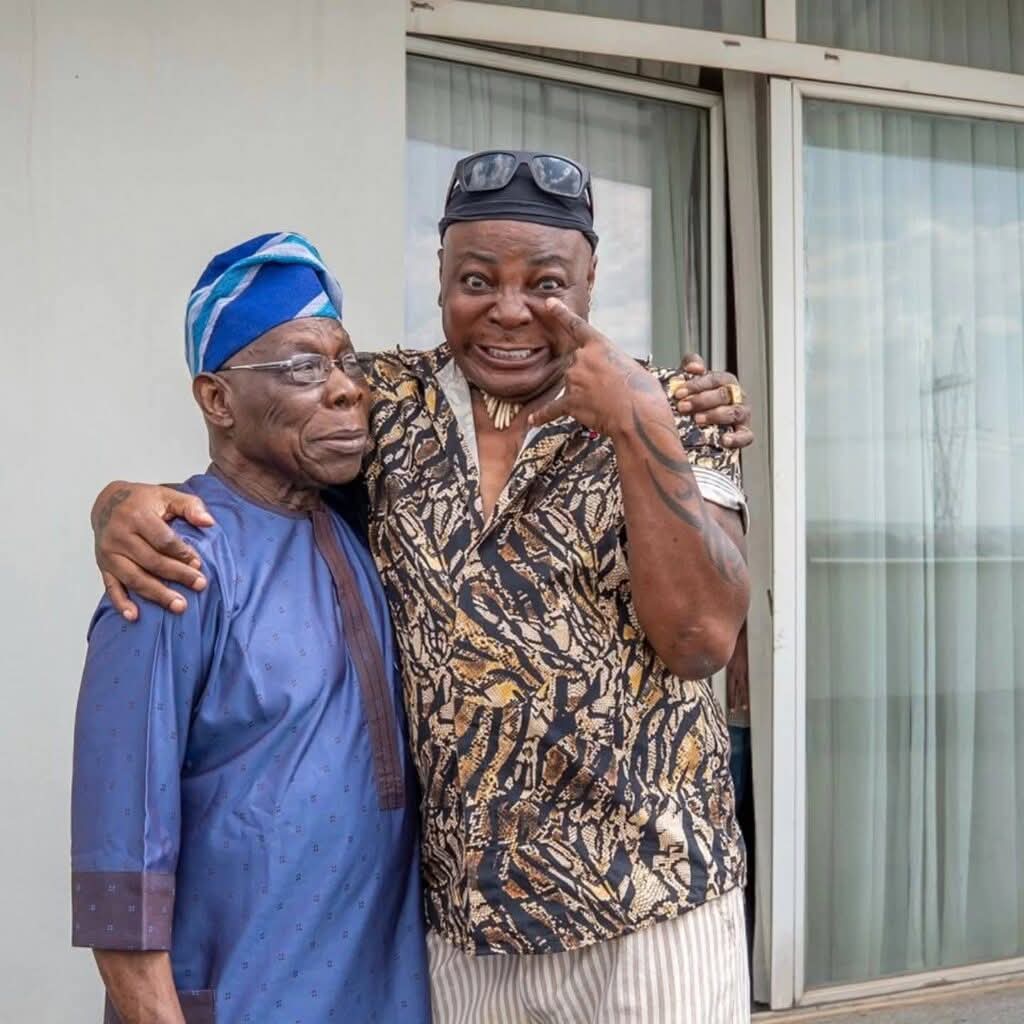
Former President Olusegun Obasanjo has revealed how his initial disapproval of entertainer Charles Oputa eventually turned into admiration after witnessing the way the entertainer cared for his parents.
Speaking during an appearance on the Before Tomorrow Comes Podcast, Obasanjo recounted his long relationship with the Oputa family, particularly Charlie Boy’s late father, Justice Chukwudifu Oputa, whom he described as one of the few Nigerians he genuinely admired.
According to the former military leader, he was initially shocked by Charlie Boy’s unconventional appearance and lifestyle, which sharply contrasted with the polished and disciplined image of his father.
Obasanjo said seeing Charlie Boy’s unusual dress sense made him question how the son of such a respected jurist could choose such a path.
However, his perception changed after a visit to Justice Oputa, whom he unexpectedly found staying at Charlie Boy’s residence.
He explained that although Charlie Boy’s lifestyle still appeared eccentric to him at the time, he was deeply moved by the entertainer’s devotion to his father.
Obasanjo noted that the level of care and attention Charlie Boy gave the late justice surpassed anything he had expected, adding that the experience made him look beyond appearances.
He later came to see Charlie Boy’s dramatic dressing and public behaviour as part of his entertainment identity and a means of creative expression.
The former president said the experience taught him valuable lessons about family, individuality and tolerance, especially regarding how parents should support children who choose unconventional but legitimate career paths.
He also praised the relationship between Charlie Boy and his father, saying Justice Oputa eventually embraced his son’s choices despite their differences.
Obasanjo further disclosed that he became close to Charlie Boy’s mother, whom he described as a morally upright woman, and commended the entertainer for the care he gave both parents until their deaths.
Reflecting on Charlie Boy’s memoir, 999, Obasanjo described the work as insightful and rich with lessons on resilience, family values and philanthropy.
The memoir is expected to be publicly presented in July in Lagos.
Obasanjo also used the interview to preach tolerance and national unity, warning Nigerians against judging entire ethnic groups based on the actions of a few individuals.